
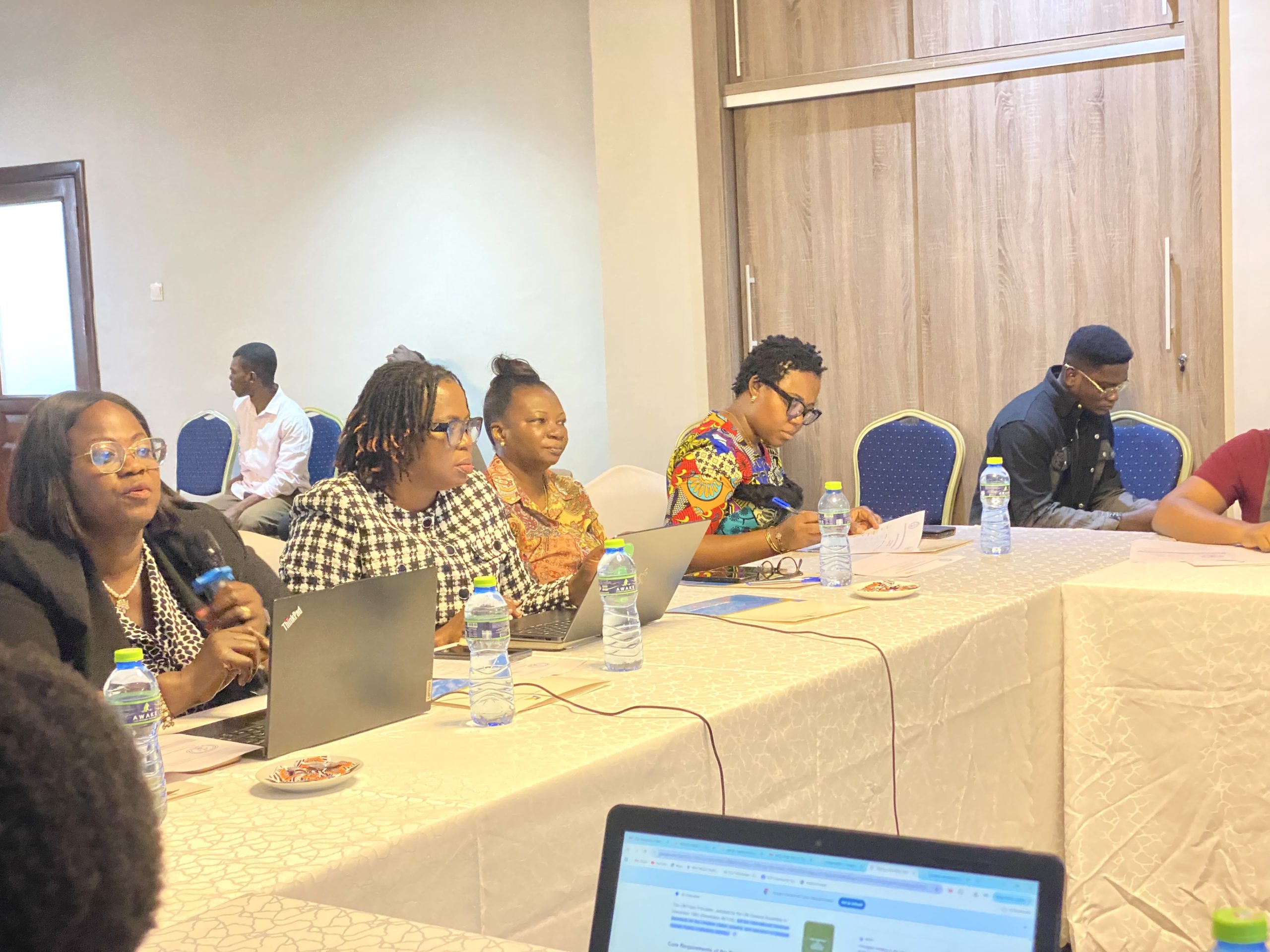
The Commission on Human Rights and Administrative Justice (CHRAJ), with funding support from the United Nations Population Fund (UNFPA), has organised a two-day capacity-building and coordination forum for members of the Ghana Human Rights NGOs Forum on gender-based violence (GBV).
The forum, held from Tuesday, September 22, to Wednesday, September 23, 2026, at the Airport View Hotel in Accra, formed part of efforts to strengthen civil society organisations’ capacity to prevent and respond to GBV through rights-based and survivor-centered approaches.
It was organised under the project “Scaling Up Access to Rights-Based Integrated Gender-Based Violence Services.”
Participants included representatives of civil society organisations, community development groups, disability rights organisations, child protection advocates, women’s rights organisations and other human rights actors.
Speaking at the opening of the forum, Ms. Mercy Larbi, Deputy Commissioner of CHRAJ, said gender-based violence remained one of the persistent human rights violations, rooted in discriminatory social norms, unequal power relations, and institutional gaps.
She said GBV included physical, sexual, psychological, and economic violence; harmful traditional practices; sexual harassment; sextortion; and violence against vulnerable groups.
Ms. Larbi said addressing GBV required more than isolated responses to individual cases, adding that it required sustained efforts to address harmful cultural practices, gender stereotypes, and structural inequalities.
“While the state holds the primary obligation to respect, protect, and fulfill the human rights of every individual, the Commission recognises that state mechanisms alone cannot eradicate gender-based violence,” she said.
She described non-governmental organisations and civil society groups as important partners in addressing GBV, particularly because of their roles in responding to cases, educating communities, advocating for survivors, monitoring human rights violations, and promoting institutional accountability.
Ms. Larbi said the objective of the engagement was to strengthen the collective capacity of civil society organisations to apply human rights-based and gender-responsive approaches to the prevention and response to GBV.
She said such an approach should place the dignity, safety, autonomy, and participation of survivors at the centre of interventions.
The Deputy Commissioner urged participants to use the forum to share frontline experiences, develop practical strategies, and strengthen networks among organisations working in the area of human rights and gender equality.
She said the outcomes of the engagement would contribute to strengthening rights-based interventions and ensuring that survivors received timely protection and access to justice.
The first day of the forum focused on strengthening NGO collaboration, community engagement, and monitoring.
Participants examined the role of civil society organisations in relation to the Paris Principles, monitoring and evaluation, advocacy, community engagement, and human rights monitoring.
The sessions also explored opportunities for continued collaboration through the Ghana Human Rights NGOs Forum.
Participants were taken through gender concepts, including sex and gender, gender norms, social norms and harmful practices, as well as the relationship between culture and human rights.
The forum further examined the obligations of the state to respect, protect, and fulfill human rights, including mechanisms for reporting and monitoring state compliance.
On the second day, participants examined discrimination and intersectionality, including how overlapping vulnerabilities could increase exposure to GBV and exclusion.
The forum also covered the definition, forms, causes, and effects of GBV, as well as approaches to prevention and response.
Particular attention was given to survivor-centered approaches and referral pathways, with participants discussing ways of improving support and access to appropriate services for survivors.
The programme also provided an overview of international and national laws and policies relating to GBV.
Participants examined legal protections and institutional responsibilities, as well as affirmative action as a tool for addressing discrimination and promoting equality.
The sessions were facilitated by officials from CHRAJ, including officers from its public education, legal, technology, and innovation units.
The forum also addressed the emerging issue of technology-facilitated gender-based violence and online safety.
Participants discussed the changing nature of GBV in the digital environment and the need to strengthen online safety and data protection mechanisms.
The discussions highlighted the importance of equipping civil society organisations with the knowledge and tools required to monitor and respond to emerging forms of violence facilitated by technology.
The two-day forum provided an opportunity for members of the Ghana Human Rights NGOs Forum to exchange experiences and strengthen collaboration in the areas of GBV prevention, human rights monitoring, advocacy, survivor protection, and accountability.
Ms. Larbi expressed appreciation to UNFPA for its support and to participating organisations for their commitment to advancing human rights and gender equality in Ghana.
She encouraged participants to translate the knowledge and strategies gained from the engagement into practical interventions to improve GBV prevention, survivor protection, referral systems, and institutional accountability.
Source: Joseph Kobla Wemakor
