The African Continental Free Trade Area (AfCFTA) Secretariat has called for renewed efforts to ensure that Africa’s micro, small and medium-sized enterprises (MSMEs) benefit directly from the continent’s growing integrated market.
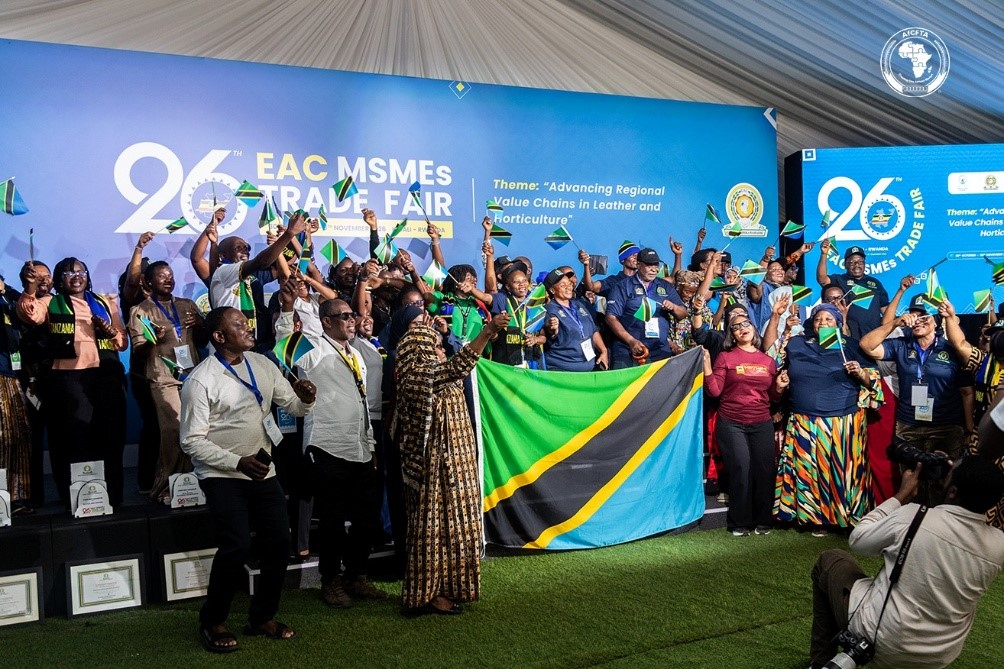
The call was made by Ms. Nomalanga Gule, Regional Advisor for Eastern and Southern Africa at the AfCFTA Secretariat, during the closing ceremony of the 26th East African Community (EAC) MSME International Trade Fair in Kigali, Rwanda, on 8 November 2026, coinciding with AfCFTA Day.
Addressing participants, Ms. Gule stressed that the success of the AfCFTA should be measured not merely by the number of countries ratifying the Agreement or adopting its protocols, but by the tangible trading opportunities created for African businesses, particularly smaller enterprises.
She highlighted the urgency of strengthening intra-African trade and developing regional value chains amid growing geopolitical uncertainty, protectionist trade policies and disruptions to global supply chains.
The regional trade fair provided a platform for entrepreneurs to showcase locally manufactured products, establish business partnerships and explore new markets. It also highlighted opportunities for regional value addition, particularly in leather and horticulture.
A major highlight of the AfCFTA Secretariat’s engagement was the implementation of its SME Booster Programme on the margins of the fair. The initiative seeks to strengthen the export readiness and competitiveness of women- and youth-led businesses, alongside the Business Support Organisations that assist them.
Through the programme, participating enterprises receive practical guidance on key AfCFTA trade instruments, including the e-Tariff Book, Rules of Origin and the Non-Tariff Barriers Reporting Mechanism. Participants also learn how to engage with AfCFTA Trading Companies to facilitate cross-border commercial opportunities.
These instruments are intended to help businesses understand applicable tariffs, determine whether their products qualify for preferential treatment, identify and report trade obstacles, and navigate the requirements of trading across African borders.
The engagement reinforced the importance of moving beyond policy commitments and capacity-building activities to actual commercial transactions that generate income, create employment and expand opportunities for African entrepreneurs.
The Secretariat further encouraged the East African Community, governments and business stakeholders to sustain their support for MSMEs by addressing practical barriers to trade and strengthening connections between producers, buyers and regional markets.
As African countries work towards establishing a more integrated continental market, the message from Kigali was clear: the AfCFTA’s ultimate success will depend on whether Africa’s smallest businesses can compete, trade and prosper across borders.
The challenge now is to translate the promise of one African market into measurable benefits for ordinary entrepreneurs, particularly women and young people whose businesses are central to Africa’s economic transformation.
Trending
- EMY Africa Awards Recognises Kojo Antwi’s contribution to music and culture
- Affo-Toffey Highlights Investment Opportunities in Ghana’s Transport and Logistics Sector
- AfCFTA Targets Faster Border Trade as Customs Leaders Prepare for Abuja Conference
- AfCFTA Calls For Real Trade Opportunities For Africa’s Small Businesses
- Ghana’s Mining Industry Gets GH¢1bn Indigenous Business Financing Lifeline
- Rosatom Forum Puts Nuclear Skills on the Agenda as Ghana Plans to Train 2,000 Scientists
- Jospong Group Supports Ghanaian Journalists To Experience, Cover COP31
- 35 Trucks Intercepted in Volta Region As NAIMOS Probes Suspected Illegal Sand Extraction
AfCFTA Calls For Real Trade Opportunities For Africa’s Small Businesses
 By Prosper Kay
