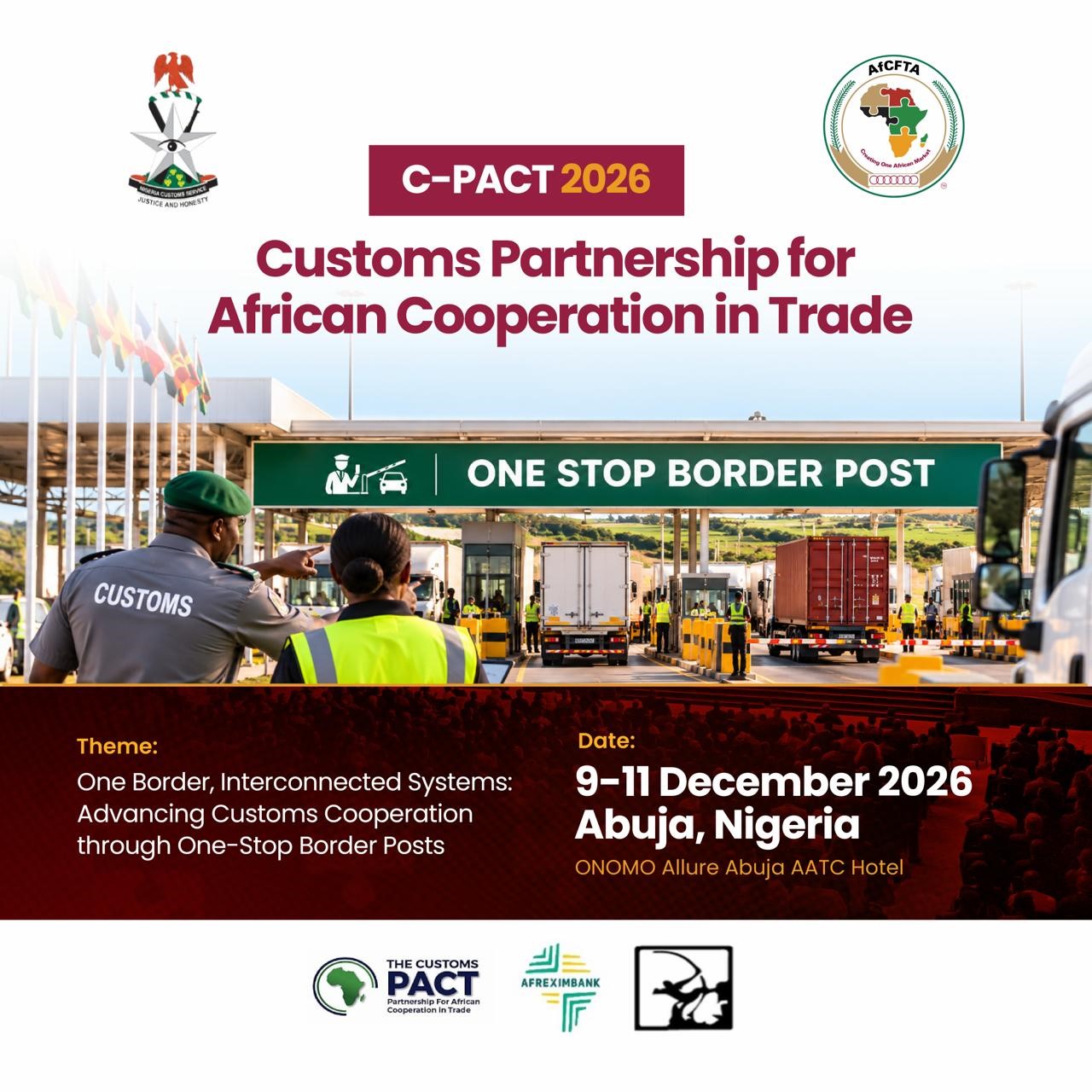
The African Continental Free Trade Area (AfCFTA) Secretariat is stepping up efforts to make Africa’s borders gateways for trade rather than obstacles, with a major customs cooperation conference scheduled for Abuja from 9 to 11 December 2026.
The three-day Customs Partnership for African Cooperation in Trade (C-PACT 2026) conference will be held under the theme, “One Border, Interconnected Systems: Advancing Customs Cooperation through One-Stop Border Posts.” It will bring attention to the practical changes needed to move goods more efficiently between African markets.
Organised by the AfCFTA Secretariat and hosted by the Nigeria Customs Service, the conference is being held in collaboration with the African Export-Import Bank (Afreximbank) and Bergmans Security Consultant and Supplies Limited.
At the heart of the discussions will be the development and operationalisation of One-Stop Border Posts (OSBPs), which seek to improve coordination between neighbouring countries’ border agencies. By reducing duplicated procedures and enabling more joined-up clearance processes, these facilities have the potential to make cross-border journeys more predictable for traders and transport operators.
Another priority is the digitalisation and interoperability of customs systems. The conference will examine how better-connected platforms and secure information exchange can help customs administrations work together, while showcasing innovative digital solutions under the AfCFTA Customs Modernisation Project.
Delegates will also consider the AfCFTA Integrated Transit System and Single Bond, two initiatives intended to simplify the movement of goods in transit across participating countries. Their effective implementation could ease administrative burdens and support more reliable movement along regional trade corridors.
For African manufacturers, exporters, logistics operators and small businesses, the relevance of these discussions is immediate. Delays at borders can increase transport costs, disrupt deliveries and make it harder for businesses to reach customers in neighbouring countries. Streamlined procedures would help make the promise of a continental market more tangible at the point where trade crosses a national frontier.
The Abuja meeting therefore places an important implementation question at the centre of Africa’s integration agenda: how can customs administrations, infrastructure providers and trade partners turn cooperation into faster, simpler and more predictable border processes?
As AfCFTA implementation advances, success will depend not only on agreements to open markets, but also on whether the systems and institutions managing Africa’s borders can work together to deliver that access in practice.
Trending
- EMY Africa Awards Recognises Kojo Antwi’s contribution to music and culture
- Affo-Toffey Highlights Investment Opportunities in Ghana’s Transport and Logistics Sector
- AfCFTA Targets Faster Border Trade as Customs Leaders Prepare for Abuja Conference
- AfCFTA Calls For Real Trade Opportunities For Africa’s Small Businesses
- Ghana’s Mining Industry Gets GH¢1bn Indigenous Business Financing Lifeline
- Rosatom Forum Puts Nuclear Skills on the Agenda as Ghana Plans to Train 2,000 Scientists
- Jospong Group Supports Ghanaian Journalists To Experience, Cover COP31
- 35 Trucks Intercepted in Volta Region As NAIMOS Probes Suspected Illegal Sand Extraction
AfCFTA Targets Faster Border Trade as Customs Leaders Prepare for Abuja Conference
 By Prosper Kay
