
Story By: Felix Ernest Odamtten / Muhammed Faisel Mustapha….
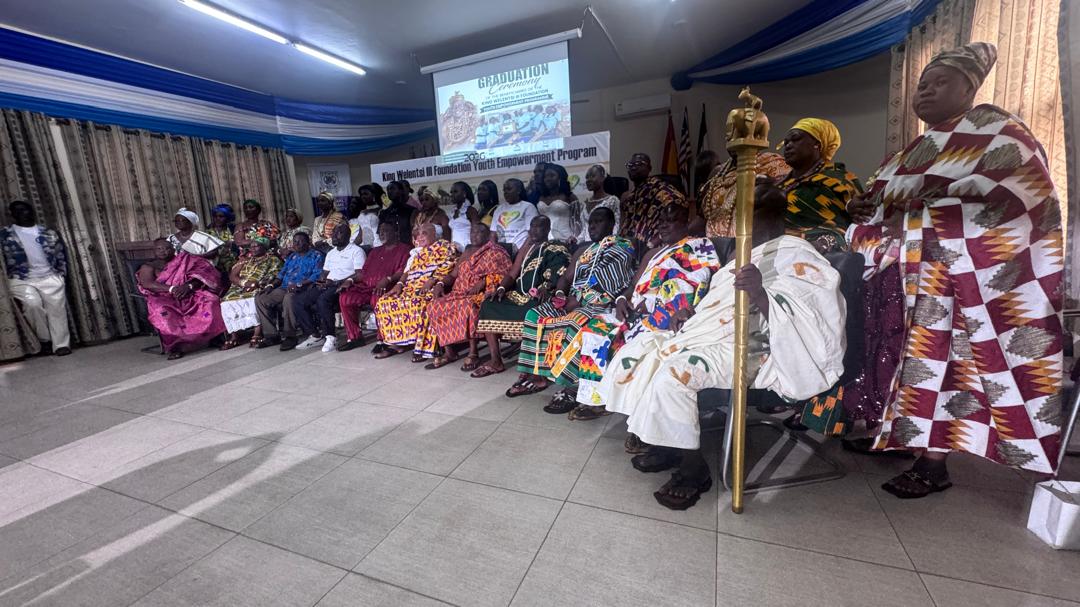
The King Welentsi III Foundation has graduated 10 young people after three years of intensive training in fashion and designing, marking another significant step in efforts to equip the youth of Nungua and surrounding communities with practical skills for sustainable livelihoods.
The initiative, established by the Nungua Mantse, Oboade Notse Prof. King Odaifio Welentsi III, forms part of the Foundation’s broader youth empowerment programme aimed at promoting employability, entrepreneurship and economic self reliance among young people.
Launched in 2023, the programme initially targeted young people who were natives of the Nungua Traditional Area, with the Foundation seeking to create a structured pathway through which beneficiaries could acquire marketable vocational competencies rather than depend solely on conventional employment.
The Chief Executive Officer of the King Welentsi III Foundation, Mr. Eric Bortey, said the response to the inaugural programme demonstrated the strong demand for vocational training opportunities among young people, with more than 50 applicants expressing interest.
Following a rigorous selection process, 11 applicants were chosen for the first cohort. Ten successfully completed the three-year programme, while one beneficiary was unable to complete the training.
Mr. Bortey said the Foundation’s support went beyond paying tuition, explaining that beneficiaries were provided with sewing machines and other essential support while their progress was monitored throughout the training period.
“Over the past three years, we have supported them by providing machines, paying their tuition fees and monitoring their progress at their various training centres,” Mr. Bortey said.
The Foundation also connected the beneficiaries with experienced practitioners within the fashion and designing industry, providing opportunities for practical exposure, mentorship and a closer understanding of the demands of the profession.
Mr. Bortey explained that the selection process was deliberately designed to identify young people with the commitment and discipline required to complete a demanding vocational programme and eventually establish sustainable careers.
Applicants were assessed at different stages, including consideration of their educational backgrounds, personal circumstances and willingness to commit themselves fully to the training. Parents and guardians were also engaged to provide information about the applicants’ backgrounds and support systems.
Trainers were subsequently consulted as part of the assessment process to determine whether prospective beneficiaries demonstrated the seriousness, discipline and aptitude necessary to benefit from the programme.
Although the inaugural cohort was reserved for Nungua indigenes, Mr. Bortey disclosed that the Foundation intended to broaden access in subsequent editions by opening the programme to qualified young people from outside the traditional area.
Under the expanded arrangement, prospective applicants will be expected to respond to public advertisements, obtain application forms from the Paramount Chief’s office and undergo the necessary assessment before final selection.
The Foundation believes that the ultimate measure of the initiative will not simply be the number of young people trained, but the extent to which graduates can translate their skills into businesses, employment opportunities and livelihoods.
Mr. Bortey said the Foundation expected the graduates to progress from trainees into accomplished professionals who could eventually become trainers and mentors for future beneficiaries.
“If they become proper masters in two or three years, we can give some of the new students to them for training,” he said, outlining a model intended to create a sustainable cycle of skills development within the community.
He urged other young people who were genuinely interested in vocational careers to take advantage of opportunities created by the Foundation, stressing the importance of commitment and seriousness in acquiring skills that could provide long term economic independence.
The Krowor Constituency Chairman of the National Democratic Congress, Hon. Benjamin Danso, who addressed the graduates, similarly urged them to remain focused and disciplined as they transitioned from training into professional life.
“Once they have been set on the path to greatness, what they need mostly is to focus on what they have been set on and make sure they improve on whatever endeavour they have taken,” Hon. Danso said.
He reminded the graduates that completing their training represented the beginning rather than the end of their journey, urging them to continually improve their craftsmanship, embrace innovation and remain resilient in the face of setbacks.
The graduation therefore represents more than the completion of a three year training cycle; it signals an emerging community based model in which traditional leadership, private initiative and practical skills development can converge to give young people a stronger stake in the local economy. For the King Welentsi III Foundation, the ambition is clear: to transform vocational training into a pathway towards self reliance, enterprise creation and a new generation of skilled professionals capable of empowering others.
