
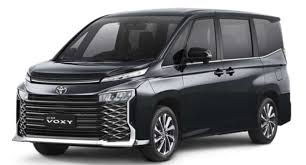
Following the Technical Working Group Report which was submitted to the NRSA in April 2026, the NRSA issued a safety advisory warning against the commercial use of Toyota Voxy vehicles, particularly those converted from right-hand to left-hand drive. According to the Report, that converted models are deemed unsafe due to structural modifications, high steering/braking failure risks, and unsuitability for commercial passenger transport, leading to a push for a ban against their use, especially on long-distance routes.
Some of the key safety concerns raised include:
1. Unsafe Conversion: That the Toyota Voxy is manufactured exclusively as a right-hand drive (RHD) vehicle, produced primarily for the Japanese Domestic Market (JDM), where vehicles are driven on the left side of the road, and that converting these vehicles to left-hand drive (LHD) is not approved by the manufacturer and compromises its structural integrity, steering, and braking systems.
2. Commercial Prohibition: The NRSA is of the opinion that using these converted vehicles for commercial passenger services (trotro) is illegal and unsuitable, as they were originally designed for private family use.
3. High Risk Factors: That technical findings suggest that these vehicles have poor handling and stability issues at high speeds or when navigating curves.
The NRSA among several others recommended that the public should avoid patronizing Toyota Voxy vehicles for long-distance travel. How can this practically work in Ghana?
Consider the plight of a passenger who has been at a bus stop at for instance, Nakpanduri, waiting for a vehicle to Gbintiri for the past 2 hours under the scorching sun, and a Toyota Voxy pulls up with the operator (driver) shouting Gbintiri, Gbintiri, Gbintiri, and an NRSA official is sitting in an air conditioned office somewhere in Accra and expects the tired and desperate passenger not to board the Toyota Voxy because he the officer deems it unsafe? Anyway, which road is safe in Ghana today?
The person advocating the ban on Toyota Voxy vehicles should first make our roads safer and proceed to provide passengers facing a similar travel inconvenience like the example above with a safe means of transport; period!
The NRSA is also pushing for strict enforcement against these conversions and their use in commercial service, particularly limiting them to intra-city use or a complete ban. The NRSA concluded by advising commuters to prioritize safety and avoid using converted Toyota Voxy vehicles for inter-city travel. This will also fail for a number of reasons. What is the definition of intra-city in this context?
If I own a Toyota Voxy vehicle providing intra-city services, and on a particular day I decide to use the vehicle for a private journey from say, Accra to Kumasi for a wedding, does this amount to a violation of the inter-city ban? It appears the Technical Working Group, and by extension the NRSA, forgot that they are living in Ghana, otherwise they wouldn’t have given this armchair advice.
The Toyota Voxy vehicles are already in the system, and their owners will be bent on recouping their investments at all costs, hence they will go to any length to stay in business.
In the past, there have been instances where car manufacturers like Toyota, had to recall vehicles from the market in Europe, the USA, Asia and Australia to correct certain defects that became apparent after sales. Going by this, Toyota can extend a similar gesture to the owners of the modified Toyota Voxy vehicles in Ghana and investigate the unsafe modifications and come out with a solution to the problem; unless Ghanaians lives don’t matter!
The government may have to shoulder the cost in order not to drive Toyota Voxy owners underground to avoid the additional burden of having to pay for the corrections.
Fortunately, the manufacturer of the Toyota Voxy, thus, Toyota, has representation in Ghana and was represented in the Technical Working Group constituted by the NRSA that came out with these unreasonable and highly unworkable recommendations.
The NRSA should consider taking this matter up with Toyota to save our lives. I don’t own a Toyota Voxy, neither have I used their services before. However, I put my feet in the shoes of anyone who has lost their life or got injured arising out of a Toyota Voxy road traffic accident and conclude that it could have been me. Secondly, I drive around most often, and Toyota Voxy vehicles are a common sight on the highways; they are either overtaking you or they are traveling in the opposite direction, as such, every motorist is not safe.
The NRSA should redirect its focus and resources to the dangerous modifications of rigid and articulator trucks; that can add up to 8 axles to a truck that was originally designed by the manufacturer with 2 axles, thus making such vehicles not only unsafe, but virtually lethal weapons of mass destruction. These trucks burst tyres at will (due to excessive load); they also have the penchant of breaking down at unsafe locations (arising out of excessive load that puts every part of the truck under strain), without positioning adequate warning triangles to warn oncoming traffic of their presence, most often right in the middle of the road, resulting in preventable accidents, and they destroy our roads because of heavy loading. Clearly, these modified trucks pose a greater danger to Ghanaians than Toyota Voxy vehicles.
The ban on the importation of right-hand drive (RHD) vehicles into Ghana under section 58 of the Customs Act, 2015 (Act 891), is another step in the wrong direction. A country that cannot produce even a spark plug or injector, banning RHD vehicles? This doesn’t make sense! Such vehicles can easily be smuggled from neighbouring countries into Ghana for private or commercial use.
Countries that typically use RHD vehicles like the United Kingdom, India, Japan, Australia, New Zealand, South Africa, Thailand, and Indonesia, have not banned left-hand drive (LHD) vehicles outright. Apart from possibly Thailand and Indonesia, all the above countries are more advanced than Ghana, yet, we sit here as a typical consumption nation and say we are banning RHD vehicles; can we produce the so-called safe LHD vehicles that we prefer? And does it mean that LHD vehicles don’t get involved in road traffic accidents? If empirical evidence had proven that RHD were unsafe, the UK would have been the first country to ban them, considering the UK Government exceptional high safety standards on its roads.
Most vehicles are manufactured with both RHD and LHD options (e.g., most Toyota vehicles, Nissan, Land Rover, BMW, Jeep, Citroen, etc), are generally easier to convert because LHD parts (dashboards, firewalls, steering racks) are readily available, as such, it doesn’t make sense to place a blanket ban on the importation of RHD vehicles into Ghana.
The UK that takes safety on its roads without compromising like the Presidential Security detail of some countries, permits the use of LHD vehicles alongside its traditional RHD vehicles, and their road safety hasn’t been compromised, so what informed the decision to ban the importation and use of RHD in Ghana? It is common to see on UK roads, LHD vehicles from Italy, Spain, Germany, Poland, the Netherlands, etc. Also, Gulf countries like Saudi Arabia, the United Arab Emirates, Qatar, Kuwait, etc., use LHD vehicles. However, some of the citizens of these countries who are awash with bags of dollars fly to the UK in their private jets with their private cars onboard and use the cars on UK roads without a problem.
The solution to whatever problems that the framers of Act 891 saw in RHD vehicles doesn’t lie in a total ban, but the licensing of approved garages to carry out the conversions from RHD to LHD.
A majority of both rigid trucks and articulator trucks on Ghana’s roads were originally RHD from the UK. This conclusion is drawn on the basis that most of these vehicles still display the UK registration plates mostly on the front grill, or at the rear bottom of the unit/tractor mudguard. What is required at this juncture therefore, is efficient regulation of selected garages to serve as the only recognized points of conversions from RHD to LHD!
Alhassan Salifu Bawah
(son of an upright peasant farmer)
