
Story By: Nii Okpoti Odamtten / Muhammad Faisal Mustapha…
In a reflective assessment of Ghana’s recent economic innovation drive, a former Director of the National Entrepreneurship and Innovation Programme (NEIP), Joseph Osei Oppong-Brenya, has credited former President Nana Addo Dankwa Akufo-Addo with fundamentally reshaping the country’s entrepreneurial ecosystem through the establishment and expansion of NEIP.
Speaking at the Youth in Modern Entrepreneurship programme organised by the India-Ghana Chamber of Commerce, Mr. Oppong-Brenya positioned NEIP as one of the most consequential public sector interventions in Ghana’s contemporary economic development agenda.
He described the programme as a “structural turning point” in state led entrepreneurship support, designed to move beyond rhetoric into practical, scalable interventions for job creation and enterprise development.
According to him, NEIP, launched in July 2017, was conceptualised as the government’s flagship entrepreneurship engine, intended to provide coordinated support for startups and emerging businesses across the country.
He noted that the initiative deliberately expanded its reach to include youth, women entrepreneurs, persons with disabilities (PWDs), head porters popularly known as kayayei, students, and even prison inmates, reflecting what he called an “inclusive development philosophy.”
“The idea was not just to create businesses, but to democratise access to opportunity,” he said, underscoring the programme’s focus on broad based participation in the economy.
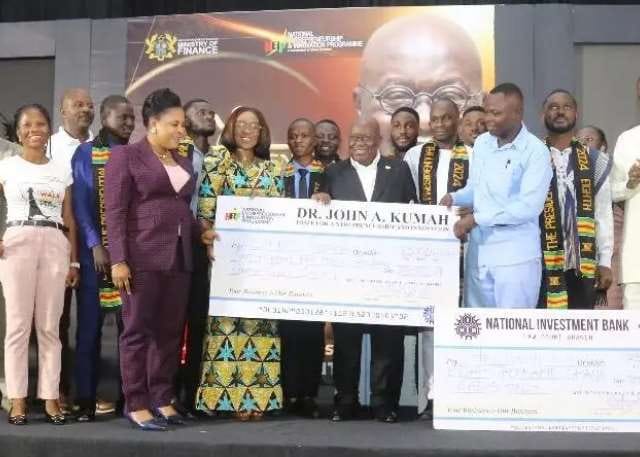
By the close of 2023, Mr. Oppong-Brenya disclosed that NEIP had supported approximately 15,000 startups, contributing to the creation of more than 103,000 jobs nationwide, a milestone he described as evidence of the programme’s tangible economic footprint.
He argued that these outcomes had helped reposition Ghana within West Africa’s emerging innovation landscape, particularly in youth led enterprise development and small business acceleration.
“NEIP proved that with the right structure, young people are not a problem to be solved they are solutions waiting to be activated,” he remarked.
He further highlighted a series of flagship interventions rolled out under the programme, including the Students Entrepreneurship Initiative, the Presidential Empowerment Programme for Persons with Disabilities, the Kayayei Empowerment Programme, Entrepreneurship for Restoration targeting prison inmates, Youth in Innovative Agriculture, the Presidential Business Support Programme, and Hubs Acceleration Grants.
These interventions, he said, were designed not merely as financial lifelines but as integrated support systems combining skills training, mentorship, market access, and capital infusion.
“Entrepreneurship is not charity. It is capacity building with economic returns,” he emphasized.
Mr. Oppong-Brenya maintained that thousands of beneficiaries had transitioned from informal survival activities into structured enterprises, contributing to local employment generation and community level economic stability.
He noted that the programme’s impact extended beyond urban centres into rural and peri urban areas, where access to formal economic opportunities had historically been limited.
Calling for policy continuity, he urged successive governments and stakeholders to protect and deepen the gains of NEIP, stressing that sustainable entrepreneurship development depends on ecosystem strengthening rather than isolated funding interventions.
“The future is not in one off grants. It is in building ecosystems that allow ideas to survive, scale, and compete globally,” he stated.
He concluded that NEIP’s model offers a replicable framework for inclusive economic transformation, demonstrating how targeted government intervention can catalyse innovation, expand employment, and drive long term national growth.
