
Story By: Felix Ernest Odamtten / Muhammad Faisal Mustapha
Ghana’s renewed campaign to protect its rivers from illegal mining has intensified along the Bia River, where the National Anti-Illegal Mining Operations Secretariat (NAIMOS) has launched targeted operations against mining activities in Krokosue in the Juaboso District and Patakro in the Bodi District.
The operation, conducted on August 7, 2026, combined riverine and mobile patrols to identify active mining operations along the Bia and its tributaries. The intervention forms part of NAIMOS’ broader effort to deny illegal miners access to critical water bodies and prevent further degradation of river ecosystems.
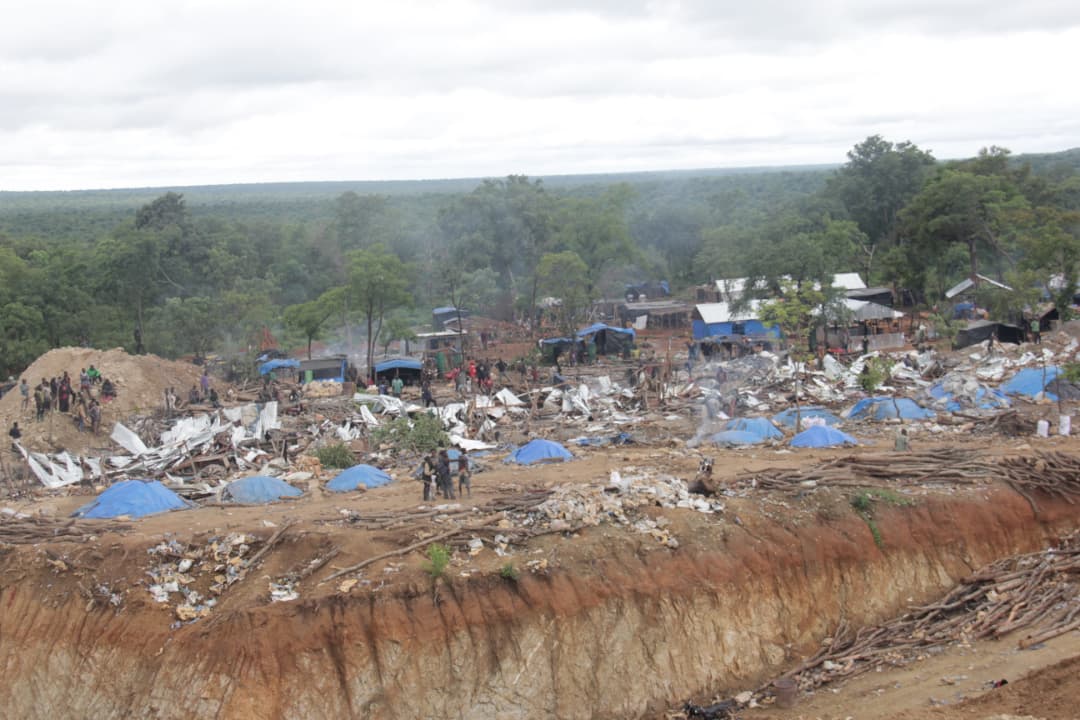
During the patrols, the Taskforce identified more than 20 active mining pits along sections of the river. The sites reportedly featured extensive use of chanfang machines and water pumps for sand washing, bringing mining operations directly into the river environment.
The scale of activity encountered during the operation highlighted the continuing pressure on the Bia River and the difficulty of protecting waterways that run through areas where illegal mining has become deeply established. NAIMOS personnel moved to disrupt the operations and dismantle equipment supporting the activities.
Three excavators were immobilised during the intervention, with critical components seized by the Taskforce. Four motorbikes, a water pump and a pump-action firearm were also seized, while enforcement personnel destroyed additional machinery and structures associated with the illegal mining operations.
Fourteen chanfang machines, two large water pumps, three motorbikes and four makeshift structures were destroyed. The seizures and destruction were intended to weaken the operational capacity of miners and prevent the immediate continuation of activities at the affected locations.
“The fight to protect the Bia is ultimately a fight to preserve water, livelihoods and the ecological future of surrounding communities.”
The environmental condition uncovered during the patrols added urgency to the operation. Sections of the Bia River had reportedly turned brown and milky, while illegal miners had diverted portions of the river channel to facilitate their activities.
The diversion of the waterway represents a particularly serious environmental concern because altering the natural course of a river can affect riverbanks, aquatic habitats and surrounding land. Combined with mining and sand-washing activities, such interventions can accelerate the degradation of an already vulnerable river system.
For communities that depend on the Bia and its tributaries, the consequences extend beyond the immediate mining sites. The health of the river is connected to water availability, agriculture, local livelihoods and the broader ecological balance of the region.
“A river diverted for mining is more than a damaged waterway it is a warning about the long term cost of environmental neglect.”
NAIMOS says the operation will not end with the removal and destruction of mining equipment. The Secretariat intends to sustain riverine and ground operations in the affected areas to disrupt illegal mining and prevent operators from returning to cleared locations.
The agency also plans to liaise with relevant institutions to facilitate the removal of mining equipment from the river corridor and strengthen measures aimed at preventing further environmental damage. Such cooperation will be essential if enforcement operations are to produce lasting results rather than temporary interruptions.
The Bia operation also demonstrates the increasingly complex nature of Ghana’santi illegal mining campaign. Enforcement agencies must contend not only with mining machinery but also with the rapid movement of operators, the availability of replacement equipment and the challenge of monitoring extensive river corridors.
“The objective is not simply to clear the river of machines, but to create the conditions for the Bia to recover.”
NAIMOS remains committed to protecting Ghana’s water bodies and restoring areas damaged by illegal mining. Along the Bia River, the latest intervention has disrupted numerous mining activities and exposed significant environmental damage, but the greater test will be whether sustained surveillance and enforcement can prevent a return to the river.
The operation has therefore placed the Bia River firmly within Ghana’s wider national debate over illegal mining, environmental protection and water security. As NAIMOS continues its patrols, the future of the Bia will depend on whether enforcement can be matched by sustained monitoring, restoration and community support for protecting one of the region’s critical natural resources.
