
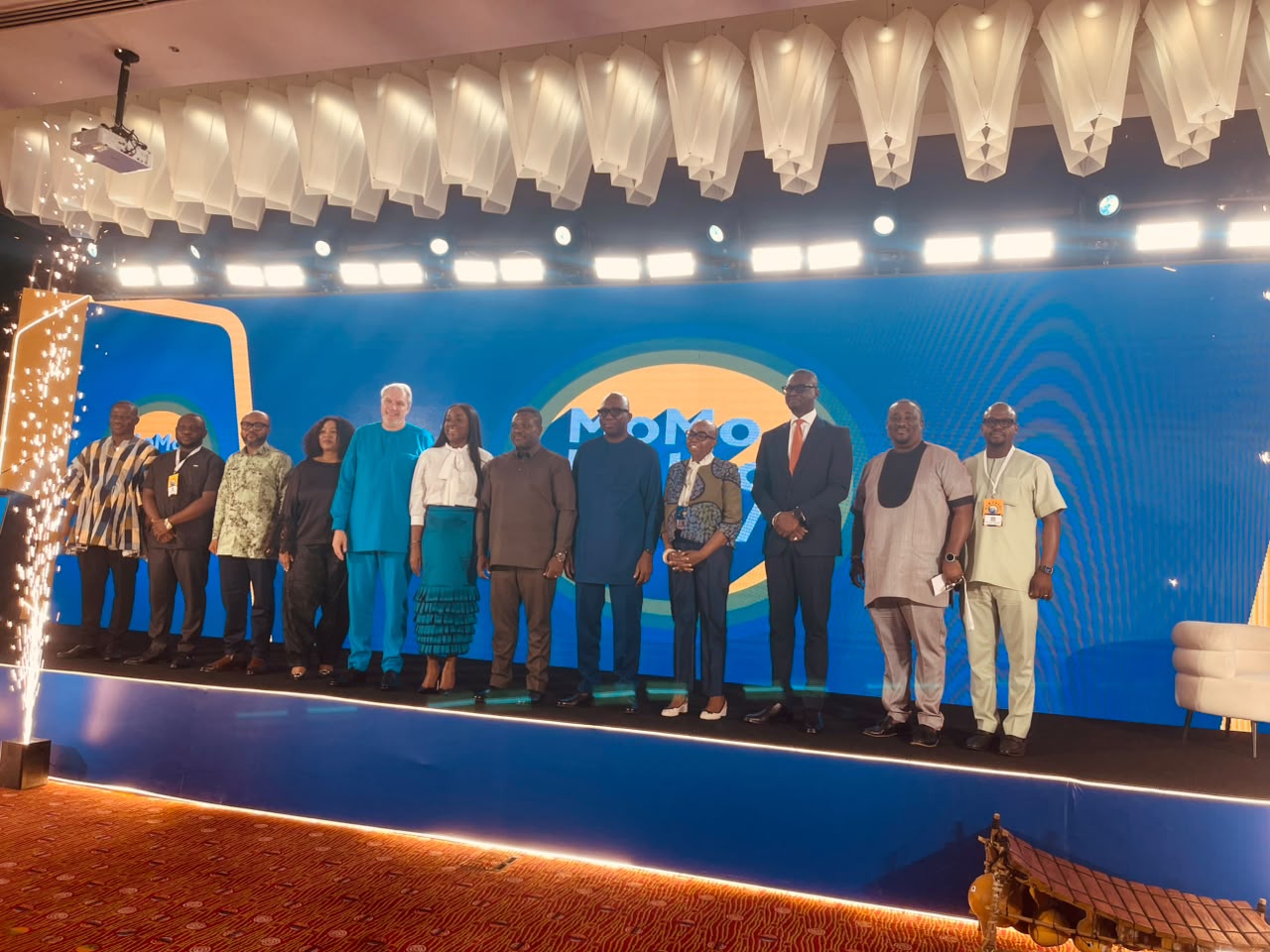
Mobile Money FinTech Limited (MMFL) is moving to expand Ghana’s pool of homegrown financial technology entrepreneurs with the launch of the MoMo FinTech Lab, a national programme designed to transform promising ideas into scalable digital businesses and extend innovation opportunities beyond Accra.
The three-month programme will identify young innovators across the country and provide them with practical training, mentorship, industry exposure and access to networks required to develop solutions to financial and community challenges.
Beyond discovering talent, the programme seeks to address a longstanding challenge within Ghana’s technology ecosystem — the gap between having an innovative idea and securing the technical expertise, regulatory knowledge, mentorship and investment required to build a sustainable business.
The initiative will operate through regional boot camps in Accra, Kumasi and Tamale, creating opportunities for young innovators outside the capital to participate in Ghana’s growing FinTech and digital economy.
Chief Executive Officer of MMFL, Shaibu Haruna, said the programme was designed to ensure that location does not prevent talented young Ghanaians from accessing opportunities to develop their ideas.
He said Ghana has promising innovators across the country who may understand problems within their communities and have ideas for solving them but lack the resources and networks required to move from concept to commercial product.
Using the example of a university student in Kumasi, Haruna explained that a young innovator could identify a problem on campus and develop a digital solution but struggle to access mentorship, technical expertise, industry connections and investment.
He said the MoMo FinTech Lab would provide a pathway for such innovators to refine their ideas, develop prototypes, understand regulatory requirements and connect with experienced industry professionals.
Promising solutions could subsequently be expanded to other universities, communities or markets facing similar challenges.
Taking FinTech opportunities beyond Accra
A major focus of the programme is to widen participation in Ghana’s technology ecosystem beyond Accra, which remains the country’s dominant hub for technology start-ups, investors and digital innovation.
The Lab will begin with an open call for ideas, with interested young innovators submitting their concepts through the MoMo app.
Promising applicants will be selected from Ghana’s three broad geographical zones and invited to participate in regional boot camps in Accra, Kumasi and Tamale.
The boot camps will expose participants to practical FinTech development and help them understand customer needs, test assumptions and improve their proposed solutions.
Participants will also receive mentorship from experienced professionals and established FinTech companies working with MMFL.
The mentorship is expected to help bridge the gap between technical innovation and the commercial, operational and regulatory knowledge required to build sustainable technology businesses.
The strongest innovations emerging from the regional programmes will progress to a national Demo Day, where participants will pitch their solutions to industry stakeholders.
Haruna said the programme should not be viewed primarily as a competition for cash prizes.
Its focus, he said, is to equip innovators with the knowledge, networks and practical support required to turn promising concepts into businesses capable of surviving beyond the programme.
For solutions considered viable and scalable, MMFL will explore opportunities to provide further exposure through its platform and assess how suitable innovations could potentially connect with the broader MoMo ecosystem.
Such opportunities could provide innovators with an important bridge between developing a prototype and accessing a wider market.
Build Ghanaian solutions
Minister for Communications, Digital Technology and Innovations, Samuel Nartey George, urged stakeholders to use the programme to develop homegrown technology solutions capable of addressing Ghana’s financial and socioeconomic challenges.
He said the programme presents an opportunity for Ghana to demonstrate its commitment to building the future of financial technology around local talent, businesses and ideas.
The Minister called on universities, developers, start-ups, financial institutions, regulators and investors to remain actively involved throughout the programme.
According to him, Ghana does not lack innovative ideas or talented young people, but stronger connections are needed between innovators and the capital required to develop sustainable businesses.
He therefore called on banks and investors to provide patient capital for promising FinTech businesses, noting that technology companies often require time and sustained financial support before reaching commercial scale.
He also stressed that the growth of FinTech must be accompanied by strong cybersecurity, consumer protection, regulation and data privacy.
Government’s wider digital transformation programmes, including the One Million Coders programme, digital public infrastructure, improved connectivity and digital identity reforms, he said, are intended to provide the skills and infrastructure required to expand participation in the digital economy.
The Minister urged stakeholders to ensure that the three-month programme produces measurable outcomes, including viable businesses, meaningful mentorship and investment commitments.
He said the ultimate test should be whether innovations emerging from the programme can solve practical problems, improve lives and create employment.
BoG pushes responsible innovation
The Bank of Ghana has meanwhile urged innovators participating in the programme to make consumer protection, regulatory compliance, cybersecurity and data protection integral to their products.
Head of FinTech and Innovation at the Bank of Ghana, Owureku Asare, said the rapid growth of digital financial services makes maintaining consumer confidence critical to the sustainability of the sector.
He said customers must be protected against the loss of their funds and personal information as new financial products and services enter the market.
Asare said the Bank’s regulatory sandbox provides a pathway for innovators seeking guidance on emerging financial products, while its FinTech innovation platform creates opportunities for developers to engage with the regulator.
He encouraged participants to look beyond the technical capabilities of their products and consider governance, compliance, cybersecurity and data protection from the development stage.
These requirements, he said, would help ensure that emerging FinTech businesses can operate safely and sustainably within Ghana’s regulatory environment.
He also cited developments including regulation of virtual asset service providers, open banking, digital credit services and the growing adoption of artificial intelligence as part of the changing financial technology landscape.
Building businesses and creating jobs
MMFL expects the MoMo FinTech Lab to develop beyond its initial three-month programme into a platform for continuously discovering and developing Ghanaian FinTech talent.
The company intends to expand partnerships with universities, technology companies, investors and other industry stakeholders to strengthen the pipeline from innovation to commercialisation.
Its regional model could prove particularly important in expanding access to Ghana’s digital economy by providing opportunities to young people who may otherwise be disconnected from the country’s main technology and investment networks.
Through regional selection, boot camps, mentorship, industry engagement and the national Demo Day, participants will have an opportunity to move from identifying problems to developing, testing and pitching potential solutions.
The broader objective is to build a pipeline of Ghanaian innovators capable of developing financial technology solutions that address domestic challenges while having the potential to compete in wider markets.
A stronger connection between universities, technology communities, regulators, financial institutions and investors could also help promising ideas move more quickly from classrooms and communities into viable businesses.
READ ALSO: MTN Prioritises Human Capital for Sustainable Growth
For MMFL, the ambition is to ensure that Ghana’s expanding digital financial economy is supported by a corresponding growth in local talent and businesses capable of driving innovation.
The MoMo FinTech Lab therefore seeks to position young Ghanaians not merely as consumers of digital financial services, but as entrepreneurs and creators of the technologies, businesses and jobs that could shape the next phase of Ghana’s digital economy.
Source: Isaac Kofi Dzokpo
