
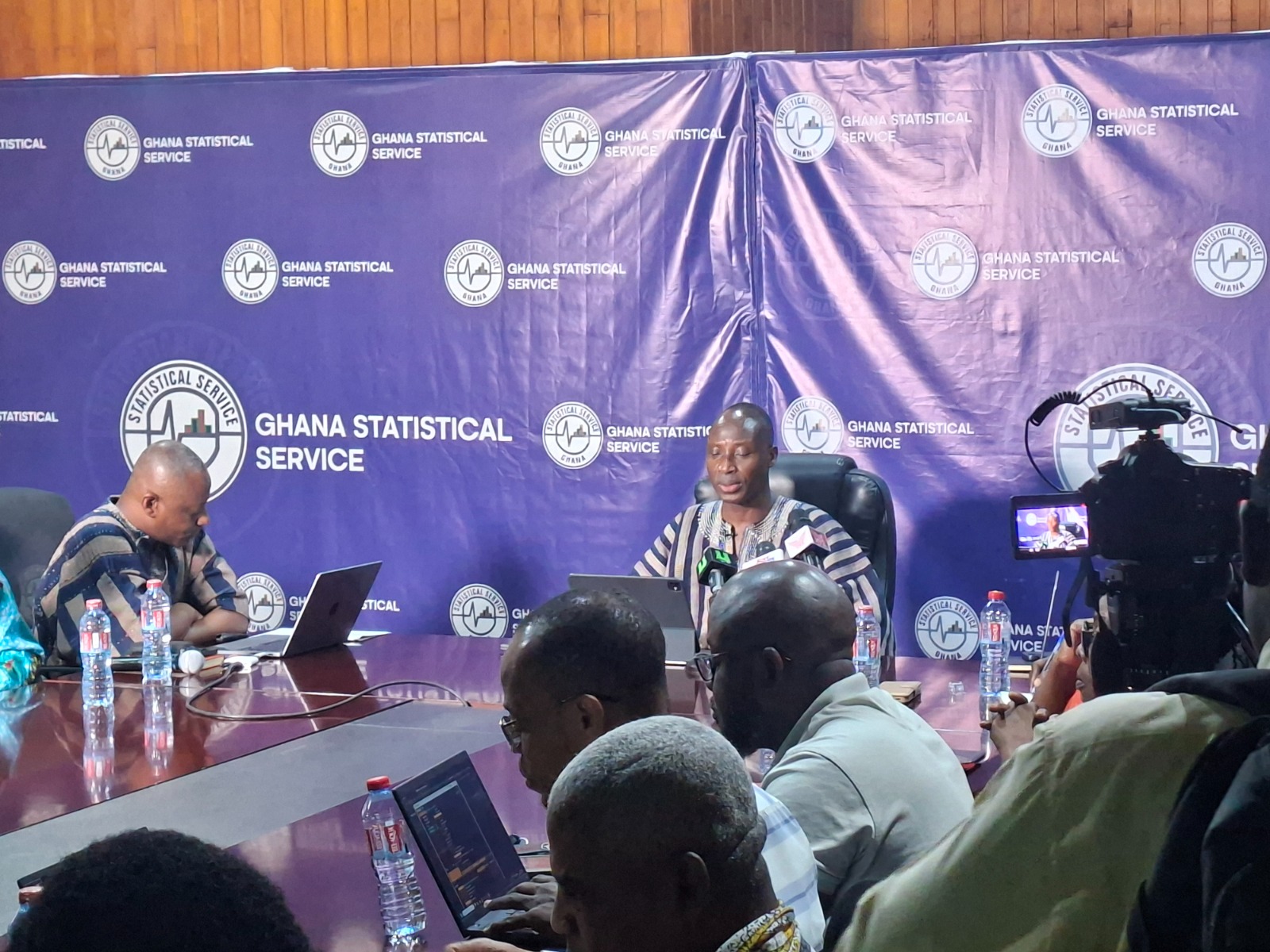
Ghana’s headline inflation rose slightly to 5% in August 2026, from 4.6% in July, the Ghana Statistical Service has announced.
The rate, however, is 6.5 percentage points lower than the 11.5% recorded in August 2025, showing a significant slowdown in price increases over the past year.
Government Statistician, Dr Alhassan Iddrisu, said month-on-month inflation was -1%, meaning average prices fell in August compared to July.
Presenting the Consumer Price Index (CPI) in Accra, he said food inflation eased to 3% from 3.1% in July, while non-food inflation rose to 6.8% from 6.3%.
Goods inflation increased to 3.8% from 3.4%, while services inflation inched up to 8.6% from 8.5%.
“Services continue to be the largest source of price pressures, growing more than twice as fast as goods,” Dr Iddrisu said.
About 71% of total inflation came from non-food items such as transport, housing, rent and education, with food accounting for 29%.
Locally produced items recorded inflation of 6.1%, compared to 2.2% for imported items, reflecting the growing impact of domestic costs on prices.
Housing, water, electricity, gas and other fuels remained the biggest driver of inflation, contributing 29.5% to the headline rate.
Food and non-alcoholic beverages contributed 29.1%, transport 13.2%, education services 7.5% and restaurants and hotels 4.8%.
Regionally, Central Region recorded the highest inflation at 11.1%, while Bono East recorded the lowest at -3.3%.
Greater Accra recorded inflation of 5%, while the Ashanti Region recorded 8.7%.
