
Story By: Felix Ernest Odamtten…
Ghana has been challenged to strengthen its defences against misinformation and disinformation by investing in artificial intelligence (AI) tools that understand local languages, expanding access to credible information and building a culture of verification as digital technologies increasingly shape public opinion.
The call emerged at the official launch of a research report by PENplusbytes to mark its 25th anniversary, bringing together policymakers, media practitioners, researchers, development partners and other stakeholders to examine the growing threat of false information in Ghana’s digital environment.
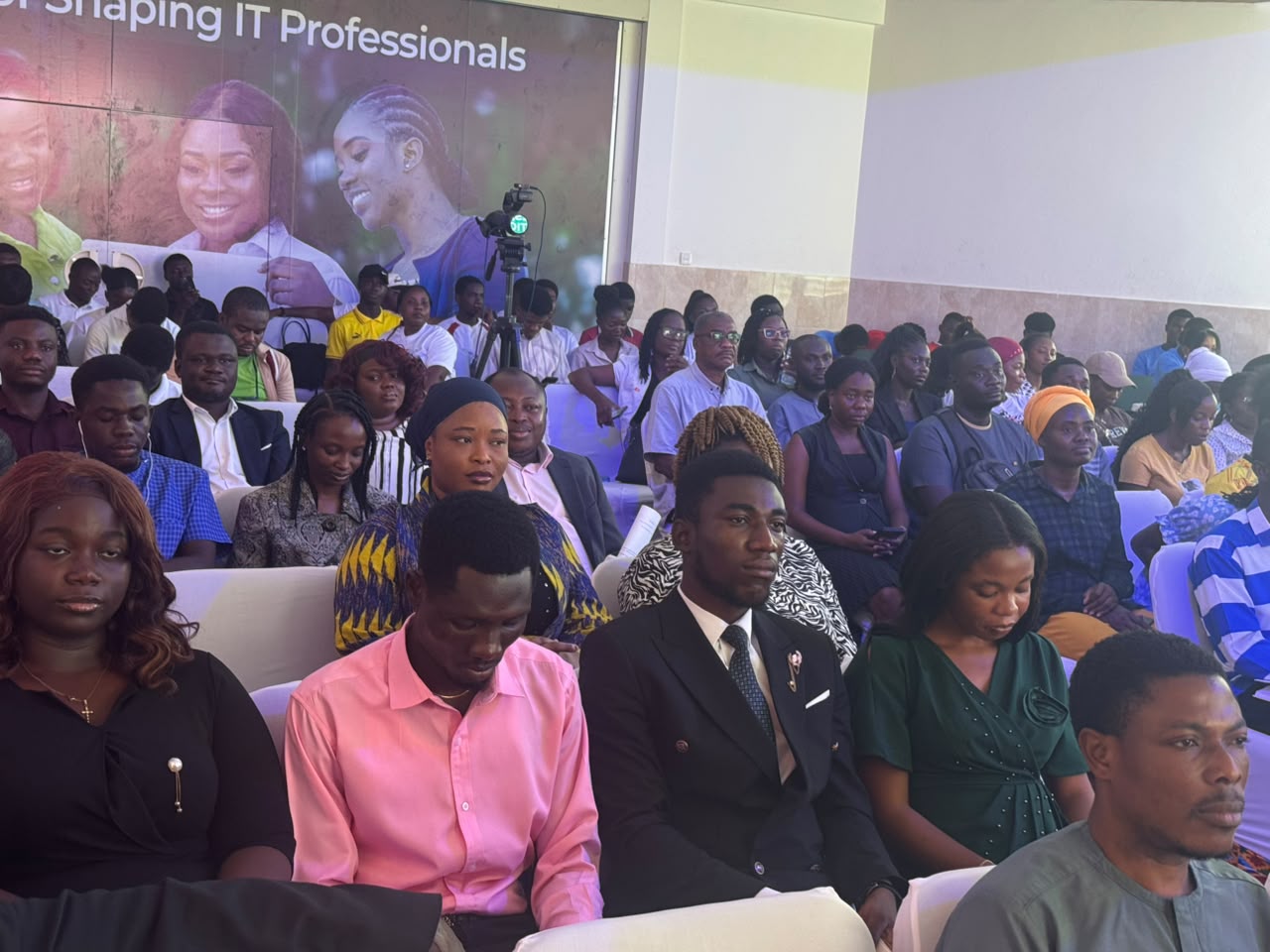
Held at the Ghana-India Kofi Annan Centre of Excellence in ICT in Accra on Thursday, October 15, the event was organised under the theme, “From Evidence to Innovation for Information Integrity in Ghana.” The anniversary celebration also offered an opportunity to reflect on the organisation’s contribution to access to information, media capacity development, accountability and democratic participation.
At the centre of the discussions was the report, Language as a Vector: Examining the Role of Local Dialects and Artificial Intelligence in Disinformation Dissemination and Mitigation in Ghana. The research examines how language, social trust and the availability of verification tools influence the spread of false or misleading information, particularly within communities whose primary means of communication are not adequately supported by existing digital technologies.
Executive Director of PENplusbytes, Mr. Jerry Sam, said the organisation’s 25 year journey reflected the need for institutions working in the information space to remain adaptable as technological developments transform how information is produced, distributed and consumed.
He explained that the organisation’s work had evolved alongside Ghana’s changing information environment, moving beyond conventional media capacity development and access to information to address emerging challenges involving digital innovation, misinformation and information integrity.
Mr. Sam said the anniversary was not simply an occasion to celebrate past achievements, but a reminder of the responsibility to help create an environment in which citizens could access reliable information and make informed decisions.
The Board Chairperson of PENplusbytes, Dr. Charity Binka, also underscored the importance of evidence based interventions, warning that the growing use of artificial intelligence presented both opportunities and serious risks for public communication.
She recounted an experience in which an AI system generated inaccurate information about her professional background, illustrating how automated tools could confidently reproduce false claims about individuals. Such errors, she suggested, demonstrated why technological innovation must be accompanied by human judgement, accountability and reliable verification.
“The important thing is what we use that language for,” was the central message of her reflections on the relationship between language and information integrity. She warned that the manipulation of local languages could become particularly dangerous because language is closely connected to identity, culture and community trust.
Dr. Binka also drew attention to International Mother Language Day, observed annually on February 21, arguing that Ghana’s linguistic diversity should be treated as an essential consideration in efforts to protect citizens from false information.
She maintained that information integrity would remain incomplete if people who communicate primarily in Ghanaian languages were excluded from credible information services and the technologies increasingly used to detect manipulated content.
A message delivered on behalf of the government’s spokesperson, Mr. Felix Kwakye Ofosu, by Deputy Presidential Spokesperson Miss. Shamima Muslim brought the research findings into sharp focus, challenging assumptions that disinformation was driven mainly by malicious actors or a lack of digital literacy.
Drawing on the report’s findings, Ms Muslim said a nationwide survey of 469 Ghanaians, conducted by 41 trained field assistants using a 68 question instrument, examined how trust, source credibility and language influenced the circulation of false information.
The research, she explained, exposed a significant gap between the languages in which many Ghanaians receive and trust information and the languages adequately supported by fact checking systems and AI powered detection tools.
“Our verification architecture is in English, but our disinformation is largely in local languages,” she observed, summarising the challenge confronting practitioners.
She explained that a misleading voice note delivered in English might attract scrutiny, while the same claim expressed in Twi, using familiar expressions or the voice of a trusted community member, could circulate rapidly through WhatsApp groups before authorities or fact checkers had an opportunity to respond.
According to Ms Muslim, the report identified what researchers describe as a credibility premium associated with familiar languages and trusted sources. Citizens may be more inclined to believe and share a message because it comes from a relative, neighbour, colleague or respected community member, rather than because they have independently established its accuracy.
One of the study’s most striking findings was that 85.3 per cent of respondents who spread misinformation did so because they believed the information was helpful or informative to their communities. The finding challenges the assumption that everyone who shares false information acts with deliberate malicious intent.
Ms Muslim said the results suggested that efforts to counter disinformation must address the wider information environment, including the social networks, communication habits and trust relationships through which misleading claims travel. She cited family groups, religious communities and neighbourhood networks as examples of spaces where useful information and false claims can circulate through the same channels.
The research also highlighted a paradox surrounding artificial intelligence. Although 70 per cent of respondents believed AI could help combat disinformation, 67 per cent were unaware of, or uncertain about, the existence of AI based detection tools. Only 32.14 per cent said they knew such tools existed, while 22.2 per cent reported having used one.
Ms Muslim said 41.2 per cent of respondents placed greater trust in their own critical thinking and digital literacy than in AI detection tools, compared with 32 per cent who expressed greater trust in the tools. She argued that the findings reinforced the need for accessible, reliable technologies that reflect Ghana’s linguistic realities, while recognising that human judgement can also be influenced by personal beliefs and existing biases.
She cautioned that AI systems designed primarily around widely represented global languages could struggle to interpret Ghanaian languages accurately, leaving speakers of languages such as Waale without equally effective means of checking suspicious audio recordings or other digital content.
The Norwegian Ambassador to Ghana, His Excellency John Mikal Kvistad, congratulated PENplusbytes on its 25 years of work and reaffirmed the importance of international cooperation in protecting information integrity and democratic institutions.
His remarks highlighted the particular challenges posed by Ghana’s linguistic diversity and the importance of developing approaches that ensure credible information reaches communities in languages they understand. He also emphasised that the central issue was not whether artificial intelligence was inherently good or bad, but how responsibly it was developed and deployed.
A representative of the Ministry of Communications, Digital Technology and Innovations, speaking on behalf of Minister Samuel Nartey George, called for practical measures to help citizens and media organisations identify misleading content before it causes widespread harm.
The representative said the speed at which false information travels makes it difficult for conventional fact checking processes to respond in time, particularly when fabricated images, manipulated audio and misleading claims gain traction online.
He noted that Ghana’s AI strategy and ongoing efforts to develop local language datasets offered opportunities to improve the relevance and accuracy of AI systems. However, he stressed the need for more accessible and affordable verification tools, stronger media standards and sustained investment in datasets that reflect Ghanaian languages and cultural contexts.
The government representative also urged stakeholders to move beyond discussions and translate the research findings into policy, community level technology testing and partnerships capable of delivering measurable results. Media organisations, fact checkers, researchers and civil society groups, he said, all had a role in improving the country’s capacity to identify and respond to misleading information.
As PENplusbytes enters its next chapter, the anniversary discussions underscored a central lesson: technology alone cannot guarantee information integrity. Effective responses require credible research, responsible journalism, local knowledge, digital literacy, transparent institutions and sustained public engagement.
The report therefore offers policymakers and practitioners an evidence based starting point for reconsidering how Ghana detects and responds to disinformation, particularly when misleading claims are communicated through familiar languages and trusted community networks. Its findings also point to the need for greater inclusion of Ghanaian languages in AI development, alongside wider public awareness of verification tools.
For PENplusbytes, the 25th anniversary represents both a milestone and a renewed responsibility to help shape an information environment in which every citizen, regardless of language, location or level of digital literacy, can access credible information and distinguish fact from falsehood.
The message from the anniversary was clear: as artificial intelligence becomes more influential in public communication, Ghana’s ability to protect its democracy will depend not only on the sophistication of its technologies, but also on whether those technologies understand its people, languages and lived experiences.
