
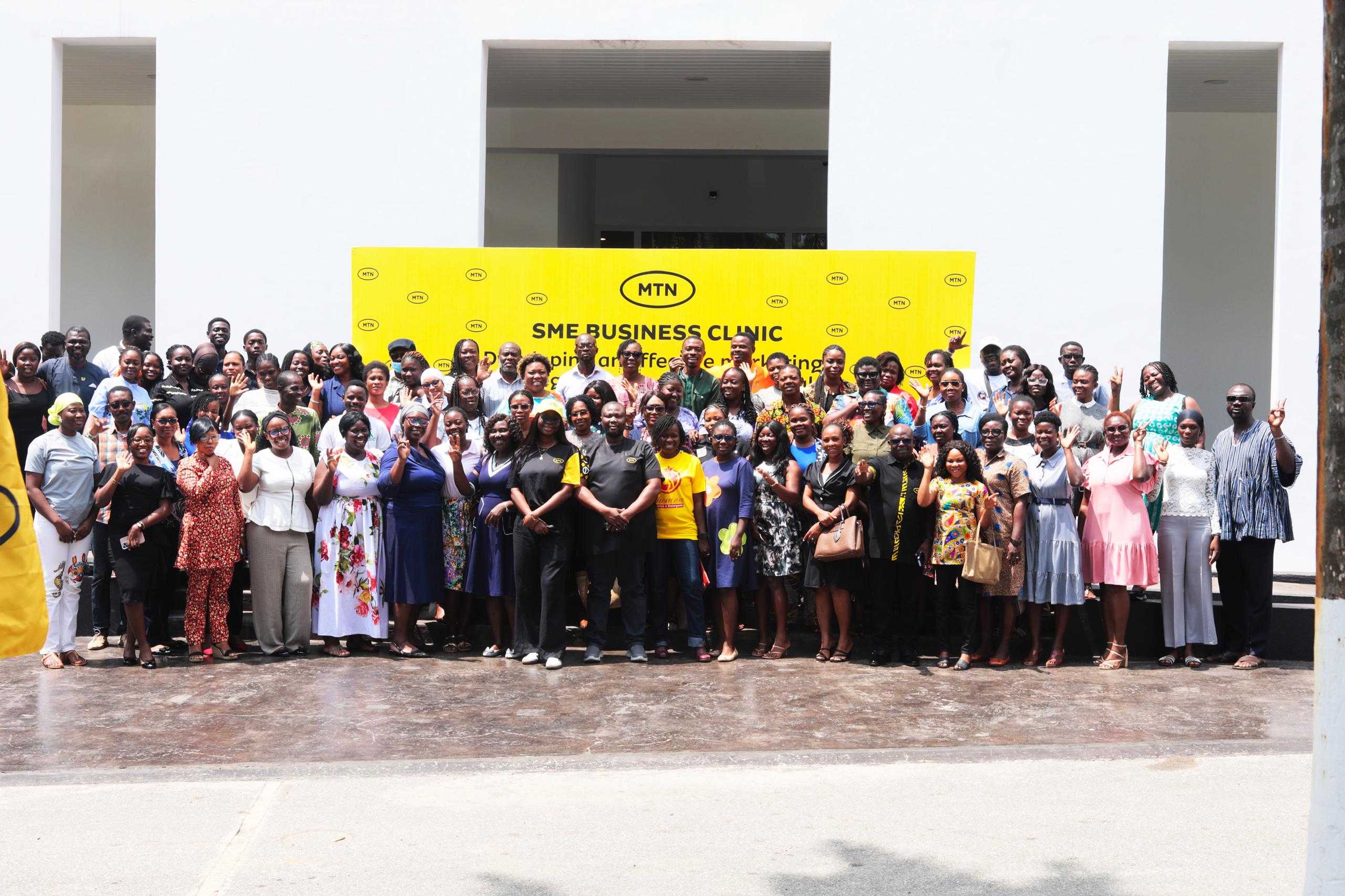
As part of sustained efforts to support the growth and profitability of small businesses, MTN Ghana has equipped more than 1,400 Small and Medium Enterprises (SMEs) across Ghana’s 16 regions with digital skills and tools to improve productivity and competitiveness.
The intervention, under the MTN SME Clinic initiative, is designed to help entrepreneurs transition from survival to sustainable growth by embracing digital technology, improving business operations and expanding access to markets.
More than 200 entrepreneurs participated in the Greater Accra edition of the MTN SME Clinic, where they received practical training in digital transformation, branding, marketing, productivity, market access and business financing.
The Greater Accra clinic was the sixth in the series, following similar engagements in the Volta, Eastern, Ashanti, Western and Northern regions, as MTN Ghana expands the initiative to support the growth and competitiveness of SMEs across the country.

The Senior Manager for SME Sales, Partnerships and Business Broadband at MTN Ghana, Mohammed Abubakar Sidick, said many promising businesses were struggling to scale because they had yet to fully integrate digital technology into their operations. “Our commitment is to support these SMEs to move from survival mode to growth mode,” he said.
According to him, digitalisation could help small businesses improve efficiency, reduce operational limitations and compete for customers beyond their immediate locations. Mr Sidick said MTN Ghana was deploying a range of business solutions to support that transition.
These include Y’ello Biz, which provides internet connectivity and enables businesses to establish an online presence through websites, and Microsoft 365 tools for productivity, communication and remote collaboration.
MTN’s Business Eye solution also enables entrepreneurs to remotely monitor their shops and offices through CCTV surveillance, with electricity- and solar-powered options and cloud storage for recordings.
Expanding Finance and Market Access
Mr Sidick identified limited access to finance as one of the major challenges constraining the growth and expansion of SMEs in Ghana.
He said MTN Ghana was partnering with financial institutions under its SME acceleration initiative to improve access to credit and provide entrepreneurs with the financial support needed to grow their businesses.
He added that SMEs could also access credit through MTN Mobile Money, with successful repayment helping to build their credit history and improve their chances of qualifying for additional financing.
Mr Sidick said MTN Ghana had also introduced Adwumapa, a tailored package aimed at supporting women entrepreneurs with affordable voice and data services, insurance protection and access to medical professionals through its Doctor on Call service. He said SME Plus had also been developed to provide similar business support to the broader SME community.
Beyond access to finance and digital tools, Mr Sidick said the SME Clinic was providing entrepreneurs with opportunities to network, build business partnerships and access new markets.
“The networking gives them access to markets because they discuss their businesses and engage one another,” he said.

SMEs Must Adapt to Changing Markets
Lead facilitator and brands and marketing consultant Richard Maglo urged SMEs to move away from outdated marketing practices and adopt strategies that respond to changing consumer needs and an increasingly competitive business environment.
“Most SMEs are operating in one era and expecting to receive results from another era,” he said.
Mr Maglo said modern marketing had evolved beyond simply producing goods and relying on advertising to drive sales. He said businesses must understand the needs of their customers, build lasting relationships and respond promptly to changing consumer expectations.
He also identified sustainability as an increasingly important factor in consumer purchasing decisions and access to international markets.
“It is no longer enough to produce goods that customers need and build a bond with them. Businesses must also be environmentally conscious,” Mr Maglo said.
He urged SMEs seeking international markets to integrate sustainability into production, packaging and marketing, particularly as new requirements such as product passports emerge.
On branding, Mr Maglo said entrepreneurs must deliberately shape public perception of their businesses rather than view branding simply as a logo or visual identity.
“Branding is not only about what people see; it is what people say about you. However, you must influence how you want them to see you,” he said.

SME Growth Challenge Goes Beyond Money
Co-founder and Director of SMEGA, Richard Norgah, said access to finance was not the only challenge affecting the growth of SMEs in Ghana.
“For a long time, we believed financing was the major challenge facing SMEs, but our research showed that the problem goes beyond financing,” he said.
Mr Norgah said research conducted by SMEGA identified product development, packaging and customer management among the key challenges limiting the growth and competitiveness of small businesses.
He said the findings informed the design of the SME Clinic, with training structured to provide entrepreneurs with practical skills to improve their products, strengthen customer management and position their businesses for growth.
Mr Norgah also highlighted the importance of market access, citing OneAfrica.online, an e-commerce platform operated by SMEGA’s sister company, OneAfrica, as an opportunity for SMEs to reach customers beyond their traditional markets.
He said the platform, which is already operational ahead of its official launch, allows businesses to showcase and sell their products to customers in Ghana and beyond the African continent.
Mr Norgah urged entrepreneurs to take advantage of the MTN SME Clinic, SME Ghana Awards and other business development initiatives to acquire new skills, expand their market reach and strengthen their businesses.
MTN Ghana and its partners are expected to continue engaging participating SMEs to monitor their progress and assess the impact of the initiative on their operations and growth.
Source: Isaac Kofi Dzokpo
