
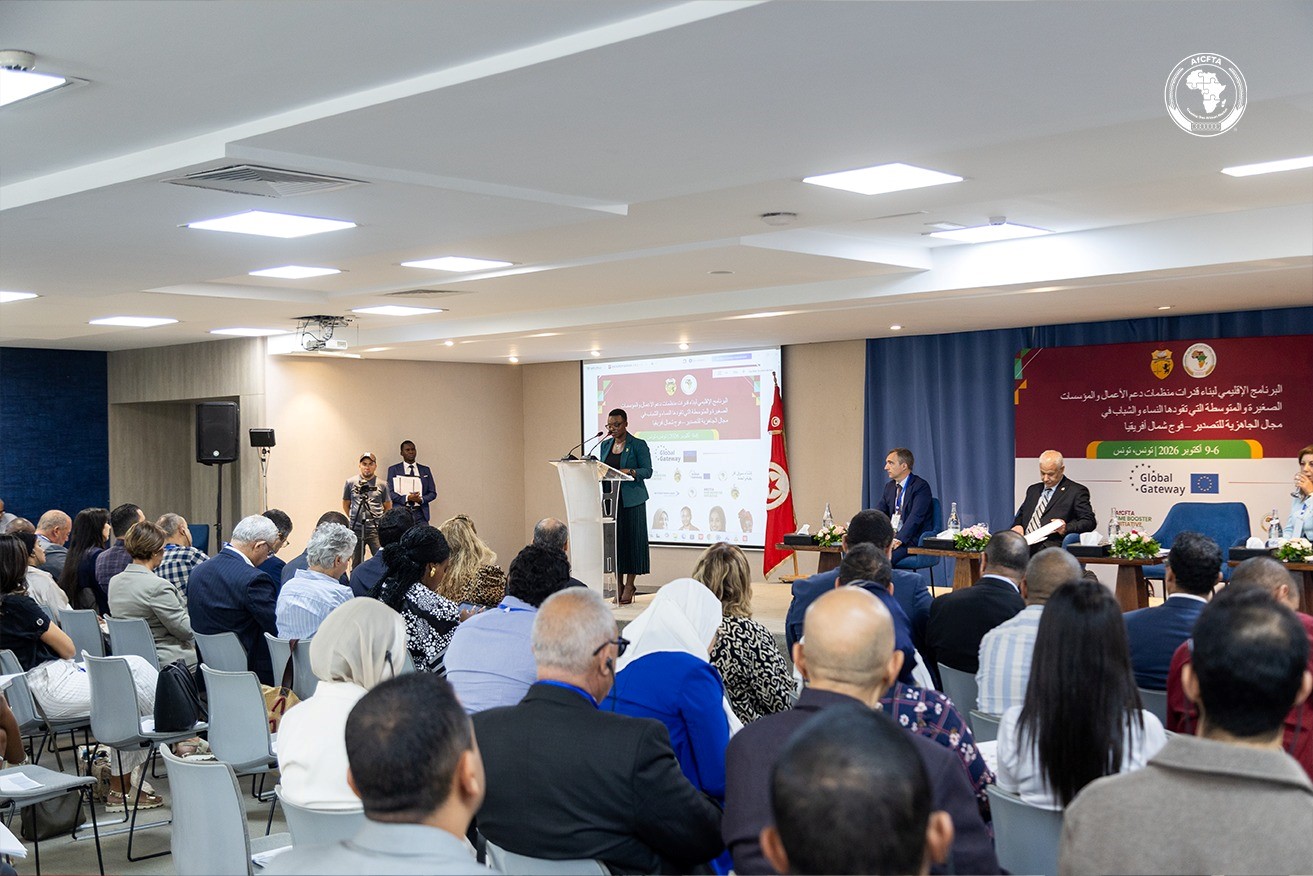
The AfCFTA Secretariat has launched the North Africa Regional Cohort of the SME Booster Programme in Tunis, Tunisia, aimed at strengthening the capacity of Small and Medium-sized Enterprises (SMEs) to participate more effectively in intra-African trade.
The programme provides SMEs and Business Support Organisations (BSOs) with practical tools and knowledge in key areas including export readiness, standards, digital trade, access to finance, logistics and market access.
Speaking at the opening, H.E. Samir Abid, Tunisia’s Minister of Trade and Export Development, underscored the importance of increasing trade among African countries to build stronger and more resilient economies across the continent.
The North Africa Regional Cohort places particular emphasis on helping businesses develop the practical capabilities required to move beyond their domestic markets and take advantage of commercial opportunities elsewhere on the continent.
Preparing SMEs for Cross-Border Trade
For many SMEs, entering new markets requires more than having competitive products and services. Businesses must understand export procedures, meet relevant standards, identify suitable markets, secure financing and navigate logistics and other cross-border requirements.
The SME Booster Programme seeks to address these practical challenges by strengthening the readiness of participating enterprises and the organisations that support them.
Its focus on export readiness is intended to help businesses better prepare for expansion into new markets, while the emphasis on standards recognises the importance of meeting applicable requirements when trading across borders.
The programme also addresses digital trade, reflecting the growing importance of technology and digital platforms in connecting businesses with customers and commercial opportunities across Africa.
Access to finance and efficient logistics are equally critical to the ability of SMEs to scale their operations and enter new markets. By bringing these elements together with market-access support, the programme provides participating businesses with a more comprehensive approach to preparing for cross-border trade.
Building Stronger African Businesses
The inclusion of Business Support Organisations is also significant. These organisations play an important role in providing SMEs with information, technical assistance and other services required to navigate increasingly competitive markets.
Strengthening both businesses and the institutions that support them can help create a more sustainable ecosystem for SME participation in regional trade.
The launch of the North Africa Regional Cohort also reinforces efforts to ensure that enterprises from across the continent are equipped to participate meaningfully in Africa’s growing integrated market.
SMEs remain an important part of Africa’s productive and commercial landscape. Expanding their ability to reach customers beyond national borders can create new business opportunities, strengthen regional value chains and contribute to greater intra-African trade.
For participating businesses in North Africa, the SME Booster Programme therefore represents an opportunity to sharpen their export capabilities, strengthen their competitiveness and develop the knowledge required to access markets across the continent.
As emphasised at the launch in Tunis, increasing trade among African countries is ultimately about building stronger, more connected and more resilient African economies, with SMEs playing a central role in that transformation.
