
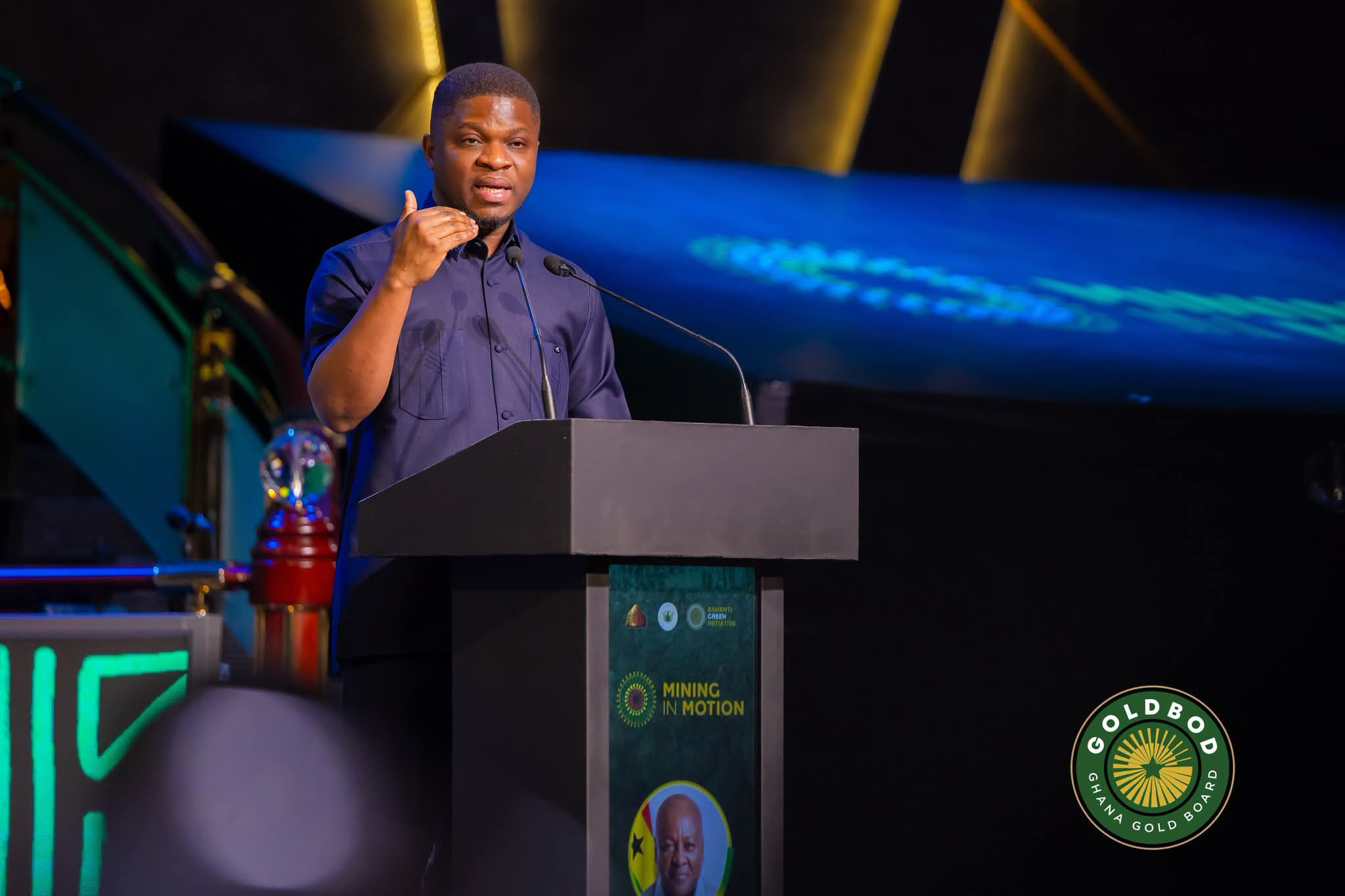
The Chief Executive Officer of the Ghana Gold Board (GoldBod), Sammy Gyamfi, has disclosed that reforms introduced by the Board have generated 4,866 direct jobs across the public and private sectors, strengthening employment opportunities within Ghana’s gold industry.
The jobs comprise 361 public-sector positions and 4,505 private-sector jobs, with additional indirect employment opportunities emerging in gold processing, jewellery manufacturing and other businesses along the mineral value chain.
Speaking on the second day of the Mining in Motion Conference on Tuesday, October 20, 2026, Mr Gyamfi said the employment gains resulted from institutional restructuring, licensing reforms and initiatives aimed at promoting local value addition.
He explained that the reforms were designed to strengthen Ghana’s mineral economy by expanding private-sector participation, encouraging entrepreneurship and ensuring that the country’s gold resources generated greater economic benefits for citizens.
According to him, African governments must move beyond mineral extraction and prioritise policies that create sustainable jobs, support local businesses and promote responsible mining practices.
Mr Gyamfi stressed that the continent’s mineral wealth should serve as a catalyst for economic transformation without compromising environmental sustainability.
“It gives me joy to note that the new institutional, licensing, and value addition reforms that we have introduced at the GoldBod have, in less than two years, created 4,866 direct jobs, made up of 361 public-sector jobs and 4,505 private-sector jobs, while countless indirect job opportunities are being opened across the value chain for artisanal smelters, jewellers and young entrepreneurs,” he stated.
He said the growing participation of private businesses in the gold sector demonstrated the potential of regulatory and institutional reforms to stimulate investment, strengthen local industries and expand employment opportunities.
The GoldBod CEO emphasised that value addition remained central to Ghana’s strategy to maximise returns from its mineral resources, particularly through the development of domestic gold processing and related industries.
He noted that expanding opportunities for artisanal processors, jewellers and young entrepreneurs would help strengthen Ghana’s participation in the gold value chain while supporting broader economic development.
Mr Gyamfi further called on African countries to adopt policies that balance mineral resource exploitation with job creation, environmental protection and sustainable economic growth.
The GoldBod reforms form part of efforts to strengthen Ghana’s gold trading and processing industry, promote local participation and retain more economic value from mineral production within the country.
