
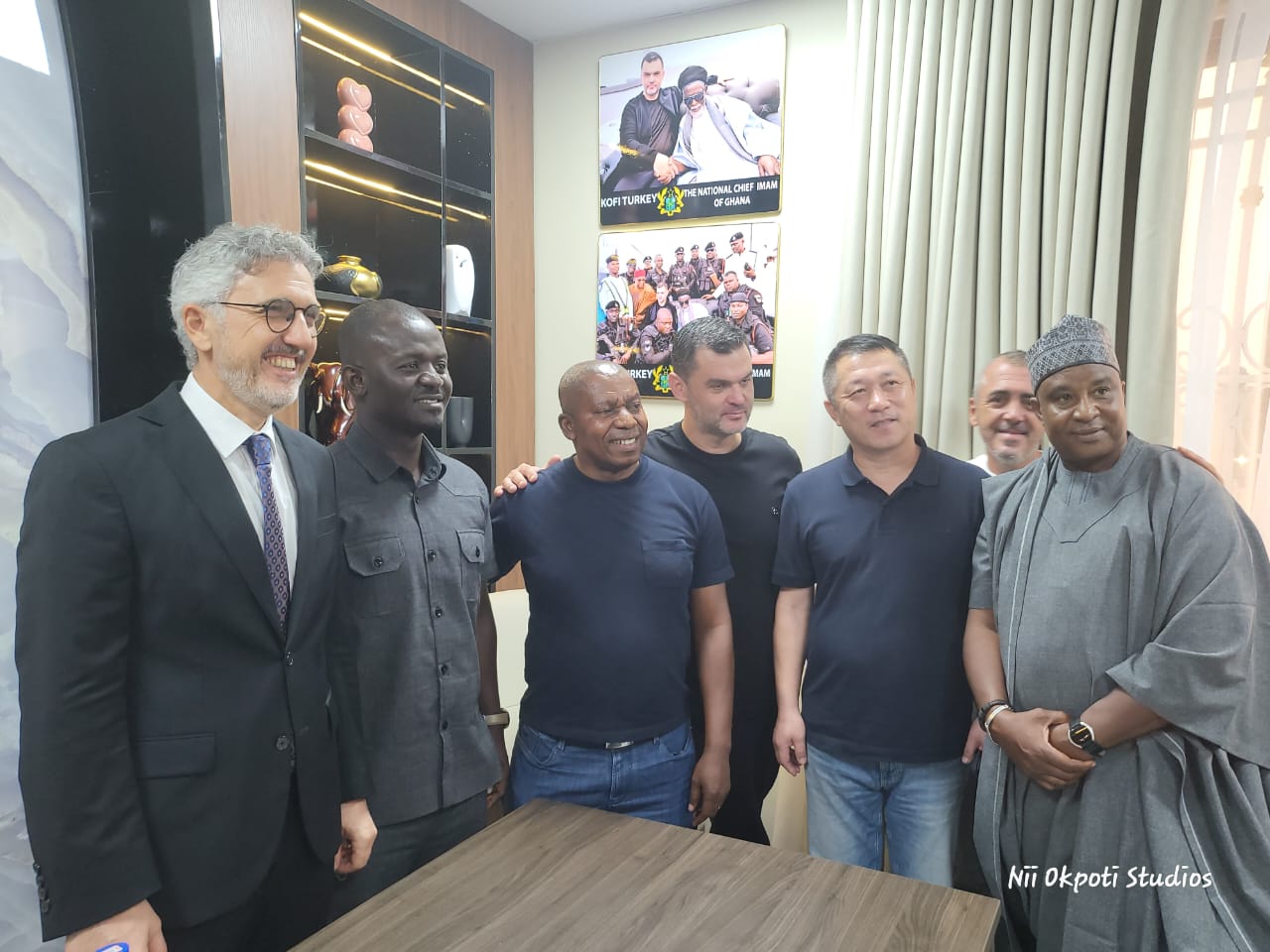
Story By: Felix Ernest Odamtten / Mohammed Faisal Mustapha….
Ghana and Turkey have been urged to deepen business and investment partnerships, with Turkish Ambassador to Ghana, H.E. Hüseyin Güngör, calling for a shift from conventional trading relationships towards long-term investments that promote local production, create jobs and strengthen economic cooperation between the two countries.
The Ambassador said the two countries possessed significant opportunities to expand commercial relations in agriculture, agro processing, textiles, machinery and spare parts, stressing that stronger private sector collaboration could unlock industrial potential and support Ghana’s ambition to become a more competitive production and export hub.
Speaking during a tour of the Nokware Frozen Foods facility, Mr Güngör expressed admiration for the scale and capabilities of the operation, describing it as an indication of the opportunities available to businesses seeking to expand Ghana’s productive capacity.
“I have seen a state of the art facility here. This shows, in fact, where trade is in Ghana. This is a very good hub with the potential to expand,” he said, encouraging businesses to recognise the possibilities of investment in the country.
Having spent nearly four years in Ghana, the Ambassador said his visits to local enterprises had continued to reinforce his confidence in the country’s commercial potential. He expressed optimism that additional production oriented businesses could emerge if investment opportunities were supported by appropriate partnerships, technology and an enabling policy environment.
Mr Güngör said Turkey’s established industrial base could complement Ghana’s growing business capabilities, particularly through the introduction of machinery, technical expertise and production technologies. Such collaboration, he argued, could help local businesses improve productivity, strengthen operational capacity and compete more effectively in regional and international markets.
He emphasised, however, that the proposed partnership should not be limited to Turkish companies entering the Ghanaian market. Ghanaian entrepreneurs, he said, should equally explore investment opportunities in Turkey, creating a two way commercial relationship that allows businesses in both countries to benefit from shared expertise and market access.
“This is not a one way street. Let me underline, Ghana has very good investors and entrepreneurs. I always advise them to go and consider investing in Turkey as well,” Mr Güngör said.
The Ambassador called for closer cooperation between the governments of Ghana and Turkey to address legal, regulatory and tax related issues that could affect investment decisions. He indicated that a more predictable business environment would be important in encouraging investors to commit capital to projects with long term production and employment objectives.
He identified textiles, agribusiness, agro processing, machinery and spare parts as sectors in which Turkish industrial capabilities could create opportunities for Ghanaian enterprises. Beyond the exchange of goods, he said, investment partnerships could facilitate technology transfer, technical training and the development of stronger commercial relationships.
“Trade is short term; in the long term, partnerships to establish here. That’s what I have been promoting on both sides,” he said, underscoring his preference for investments that establish lasting productive capacity rather than relationships confined to buying and selling finished goods.
The Ambassador also expressed Turkey’s willingness to contribute to Ghana’s development initiatives, describing economic cooperation as a mutually beneficial undertaking rather than a contest between the two countries. He said collaboration should be directed towards areas where Turkish expertise could complement Ghanaian priorities and generate practical benefits for businesses and workers.
The discussions also brought the challenge of Ghana’s dependence on imported poultry products into focus, with President of Prince Mark Company Limited, Prince Amoah, urging the government to work more closely with established poultry operators to strengthen domestic production and reduce the country’s import bill.
Mr Amoah, who imports and distributes frozen fish across Ghana, said government initiatives to expand poultry production would be more effective if they incorporated entrepreneurs with existing industry experience, operational capacity and plans to invest in local processing infrastructure.
He disclosed that he was developing a poultry processing facility at Akransah, which he expected to commission in early 2027. According to him, the facility is designed to process 3,000 birds per hour, with the potential to make a significant contribution to domestic poultry processing once operational.
Mr Amoah estimated that Ghana imported approximately 400,000 metric tonnes of chicken annually, describing the scale of imports as a major challenge for local production and foreign exchange management. He said his proposed facility could produce about 25,000 metric tonnes annually at full capacity, although that output alone would not satisfy national demand.
He argued that sustained investment, combined with appropriate government support, could help Ghana make substantial progress towards poultry self sufficiency over the next decade. He called for targeted funding and practical assistance for businesses already operating in, or actively investing in, the sector.
“The programme is a good programme, but government must identify people who are already in that business, who are already in that space, so that it can partner with them,” he said, advocating collaboration between public programmes and private sector operators.
Mr Amoah further highlighted the commercial value of Ghana–Turkey business relationships, disclosing that he had worked with Nokware Frozen Foods for approximately 15 years. He said equipment used in his operations, including tractors, trucks and loading machinery, had been sourced from Turkey through his business relationship with the company’s proprietor. His account illustrated how established commercial ties could facilitate access to equipment and support the expansion of local operations.
Adding a traditional leadership perspective, Alhaji Ahmed Tijani Dan Salley, Chief of Baribari Ga Central and Vice Chairman of the Baribari Association of Ghana, called on the government to establish more favourable conditions for foreign investors while ensuring that their presence created opportunities for Ghanaian workers and entrepreneurs.
Alhaji Tijani said foreign investment could support economic development through job creation, technology transfer and skills development. He urged Ghanaians to approach international partnerships as opportunities to acquire knowledge, build commercial capacity and eventually establish more locally owned manufacturing enterprises.
“We cannot be workers for the rest of our life. We cannot be followers. We have to be owners. And it is time for Ghanaians to be owners,” he said, making a case for greater Ghanaian participation in ownership and production rather than a continued dependence on imported finished goods.
He called for measures to ease the financial pressures facing businesses, including a review of the tax burden and improved access to affordable credit. He also urged financial institutions to consider more competitive lending rates, arguing that high borrowing costs could constrain entrepreneurs seeking to establish factories, expand agricultural production or invest in processing equipment.
The engagement brought together a common message from diplomatic, business and traditional leadership perspectives: Ghana’s economic transformation requires stronger partnerships, more productive investment and a business environment that allows local enterprises to grow. While the proposals raised by the speakers point to opportunities for Ghana–Turkey cooperation, their success will depend on effective implementation, access to finance, technology adoption and sustained collaboration between government and the private sector. Ultimately, the objective is to translate commercial relationships into productive capacity, decent employment and a stronger domestic manufacturing base.
The Chief Executive of Nokware Frozen Foods, Onur Ozer, expressed gratitude to the Turkish Ambassador to Ghana, H.E. Hüseyin Güngör, for the visit and his continued efforts to strengthen economic relations between Ghana and Turkey. He said the engagement reflected the importance of building stronger connections between Turkish investors and the Ghanaian business community.
Mr Ozer noted that sustained cooperation between businesses from both countries could create opportunities for investment, expand local production and support employment generation. He also emphasised the importance of maintaining strong relationships with Ghanaian business partners to ensure the long-term sustainability of investments.
He said foreign businesses operating in Ghana had a responsibility to contribute to the country’s economic development by creating jobs, transferring knowledge and supporting local enterprise. He added that closer collaboration between Ghanaian and Turkish businesses could help identify new opportunities across various sectors of the economy.
Mr Ozer expressed optimism that continued engagement between the two countries would encourage more Turkish investors to consider Ghana as a destination for business and investment. He said stronger partnerships would benefit both countries while contributing to the growth of Ghana’s private sector.
