
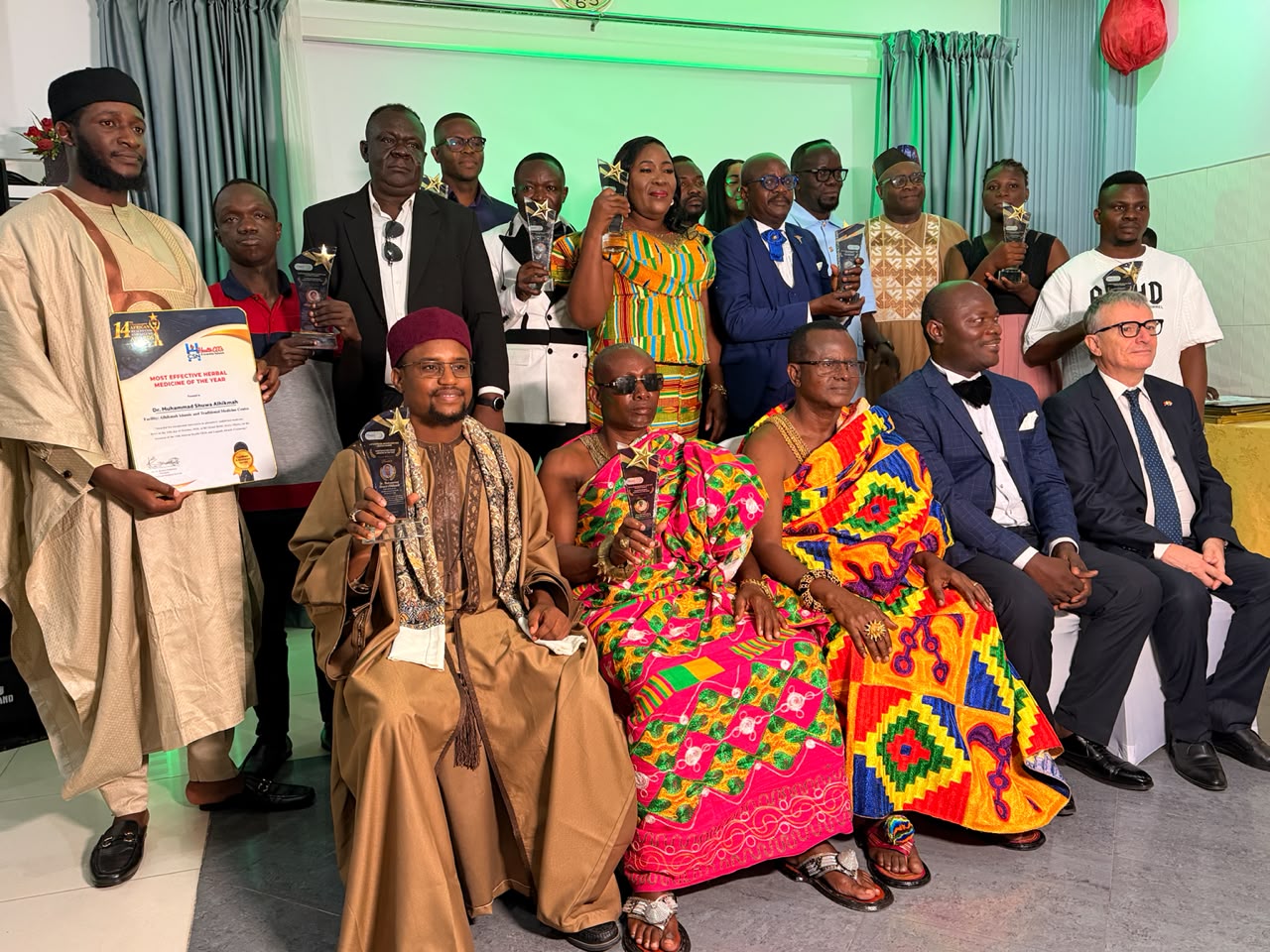
The 14th African Health CEOs and Legend Awards have been held, honouring outstanding healthcare professionals, scientists and institutions for their contributions to medical excellence, innovation and improved healthcare delivery across Africa.
The prestigious ceremony, organised by the Health CEOs and Scientists Network in collaboration with the Health Legend Foundation Africa, recognised distinguished health leaders and institutions from Ghana, Nigeria, Togo, Benin, Côte d’Ivoire and Malta.
Held under the theme, “A Night of Recognition, A Legacy of Impact,” the event celebrated individuals and organisations making significant contributions to healthcare while highlighting the need for stronger investment in local pharmaceutical manufacturing, medical research and sustainable health systems.
Beyond recognising excellence, the ceremony provided a platform for healthcare leaders, policymakers and industry stakeholders to discuss critical challenges confronting Africa’s health sector, particularly the continent’s heavy dependence on imported medicines and vaccines.

Celebrating Excellence in Healthcare
Speaking at the ceremony, the President of the Health CEOs and Scientists Network, Dr Kwame Dzikunu, emphasised the importance of recognising healthcare professionals whose dedication and sacrifices continue to save lives and improve public health.
He noted that despite the demanding nature of their work, many healthcare professionals receive little recognition compared with individuals in other sectors.
“If somebody who is able to work on a sick person who is almost dying to come back to life, that person must be celebrated,” he stated.
Dr Dzikunu explained that the awards had grown into an important platform for promoting professional excellence, knowledge sharing, international collaboration and networking among healthcare practitioners and institutions.

He said the initiative was also designed to inspire innovation and encourage healthcare organisations to adopt practices that improve service delivery and patient outcomes.
As part of efforts to promote responsible healthcare operations, the organisers introduced a new environmental sustainability award category to recognise institutions demonstrating commitment to proper medical waste management and environmentally friendly practices.
Dr Dzikunu stressed that sustainability had become an important consideration in accessing international health financing and urged healthcare businesses to integrate environmental responsibility into their operations.
He further called for increased government support for private healthcare providers and traditional medicine practitioners, including consideration of scientifically validated herbal treatments under the National Health Insurance Scheme (NHIS).
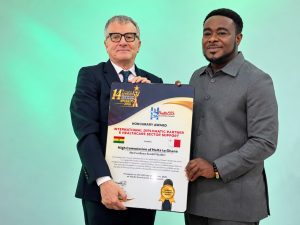
Malta Reaffirms Commitment to Ghana’s Healthcare Development
Malta’s Ambassador to Ghana, H.E. Donald Micallef, reaffirmed his country’s commitment to strengthening healthcare cooperation with Ghana, particularly in medical research, pharmaceutical regulation and cancer treatment.
He described consistency and sustained partnerships as essential to building resilient healthcare systems.
“Partnership is linked with consistency, and consistency is absolutely vital, whether it is a reliable diagnosis, a safe medicine, a healthy birth, or access to cancer treatment,” he stated.
Ambassador Micallef recalled Malta’s assistance to Ghana during the COVID-19 pandemic, including logistical support for transporting vaccines.
The Ambassador pointed to ongoing collaboration involving the Malta Medicines Authority and Ghana’s Food and Drugs Authority in pharmaceutical regulation, medical laboratory technology and equipment calibration.
He further announced plans to strengthen cooperation in cancer treatment through the International Atomic Energy Agency’s Rays of Hope initiative.

Ghana Pushes for Greater Health Sovereignty
The Chief Executive Officer of Ghana’s National Vaccine Institute, Dr Sodzi-Tettey, also called for urgent investment in local pharmaceutical and vaccine production to strengthen Ghana’s health security.
He disclosed that Ghana imports approximately 70 per cent of its pharmaceutical products, while Africa relies on foreign manufacturers for nearly 99 per cent of its vaccines.
According to him, the COVID-19 pandemic exposed the vulnerability of countries that depend heavily on external supply chains for essential medical products.
“Even when financial resources were available, access to essential vaccines and medical products could not always be guaranteed,” he stated.
Dr Sodzi-Tettey stressed that genuine health security required countries to develop the capacity to research, manufacture and reliably supply essential medicines and vaccines.
“Health security is not simply about our ability to purchase medicines and vaccines. You cannot use all your money to buy things being manufactured elsewhere,” he cautioned.
He maintained that strengthening domestic pharmaceutical production would improve preparedness for future health emergencies while creating employment opportunities and supporting economic development.

$50 Million Investment to Strengthen Vaccine Production
Dr Sodzi-Tettey disclosed that the National Vaccine Institute was pursuing major initiatives supported by a $50 million budgetary allocation from President John Dramani Mahama to accelerate local vaccine manufacturing and pharmaceutical development.
The investment is expected to support infrastructure development, regulatory capacity and partnerships with private pharmaceutical manufacturers.
He identified the local production of snake antivenom and the planned rollout of anti-tetanus serum as some of the immediate priorities.
He also highlighted the contributions of Atlantic Life Sciences and DEK Vaccines Limited to Ghana’s emerging pharmaceutical manufacturing industry.
To improve market access for locally manufactured products, Dr Sodzi-Tettey said Ghana had signed a memorandum of understanding with the Africa Centres for Disease Control and Prevention (Africa CDC) under the Africa Pooled Procurement Mechanism.
He explained that the arrangement would create opportunities for Ghanaian pharmaceutical manufacturers to access a continental market of more than one billion people.
He further announced that a government-commissioned feasibility study on reducing Ghana’s dependence on imported pharmaceuticals had been completed, paving the way for the establishment of specialised pharmaceutical parks. “The idea is that over the next five to 10 years, we are going to gradually reverse the 70% importation,” he said.

Scientific Research Critical to Herbal Medicine Development
Touching on traditional medicine, Dr Sodzi-Tettey emphasised the need for rigorous clinical trials and scientific evidence to establish the safety and effectiveness of herbal treatments.
He disclosed that the National Vaccine Institute had assessed 15 clinical trial sites across Ghana to support research into traditional and complementary medicines.
With €2 million in grant support from the European Union and the German government, researchers and herbal medicine practitioners are undertaking studies into potential treatments for hepatitis, liver diseases and tetanus.
“Until we develop the scientific research background to prove how effective they are, people are not going to be convinced,” he stated.
He encouraged stronger collaboration between conventional medical practitioners, researchers and traditional medicine producers to develop scientifically validated treatments that could contribute to Ghana’s healthcare system.

Advancing Healthcare Excellence Across Africa
The awards ceremony underscored the importance of recognising healthcare professionals while encouraging stronger partnerships, scientific innovation and sustainable investment in Africa’s health sector.
Participants emphasised that improving healthcare delivery required not only celebrating outstanding achievements but also addressing structural challenges affecting medical research, pharmaceutical manufacturing and access to essential medicines.
The 14th African Health CEOs and Legend Awards therefore served as both a celebration of excellence and a renewed call for African countries to strengthen their healthcare systems, promote local innovation and accelerate the drive towards health sovereignty.
Below are the awardees
