
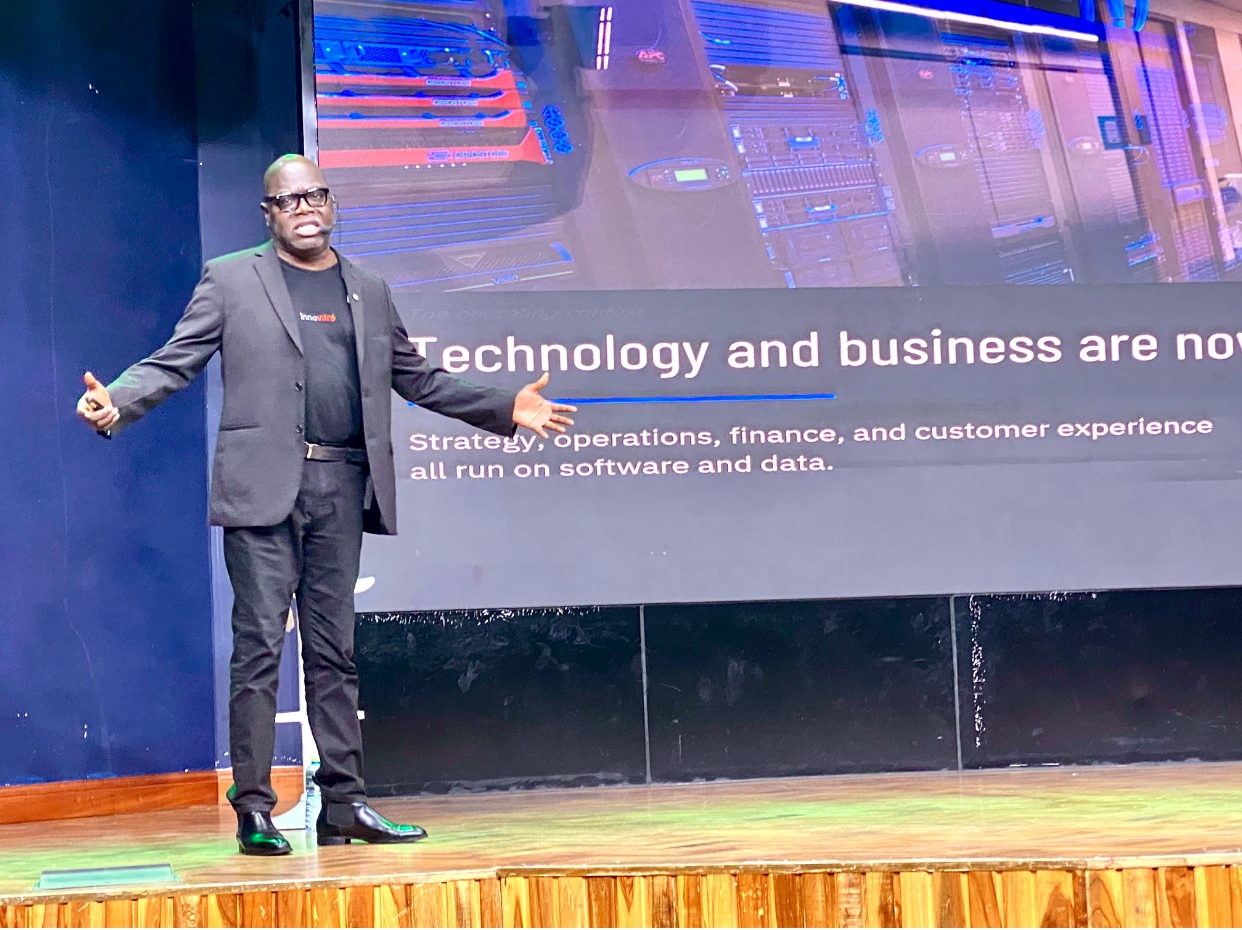
The Founding President of the Information Systems Audit and Control Association (ISACA) Accra Chapter, C.K. Bruce, has called for a new approach to leadership and corporate governance to address the growing influence of artificial intelligence (AI) and other emerging technologies in modern organisations.
He said the rapid advancement of technology was changing how organisations operated, made decisions, and exercised authority, requiring corporate leaders to adopt stronger governance frameworks and develop a better understanding of the technologies driving their institutions.
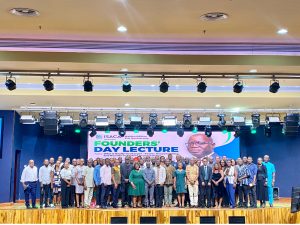
Mr. Bruce made the call at the inaugural ISACA Accra Chapter Founders’ Day Lecture held at Wesley Towers, Ridge, in Accra, on Friday, October 30, 2026.
The lecture, which formed part of activities marking the chapter’s 21st anniversary, was held on the theme “Who is Really in Charge?” Power, Responsibility, and Results in Modern Organizations.”
“We are in a new paradigm. Things have changed a lot. Technology is taking over. So we need a new type of leadership. We need a new type of governance framework,” he said.
Mr. Bruce observed that technology had evolved from a support function into a central component of organisational strategy, influencing business operations, decision-making, and institutional performance.
He said corporate executives and board members could no longer leave technology-related matters entirely to IT departments but must take an active interest in understanding the systems, risks and opportunities associated with digital transformation.
He called for technology literacy, continuous professional development, data-driven decision-making, and human-centred leadership to enable organisations to respond effectively to the changing business environment.
On artificial intelligence, Mr. Bruce said Ghana needed to move beyond policy discussions towards establishing effective regulatory frameworks to guide the responsible development and use of the technology.
He stressed that such frameworks must be supported by enforcement mechanisms to address potential risks associated with AI deployment, including ethical concerns, accountability, and the misuse of emerging technologies.
He also cautioned that poor organisational culture, weak leadership, and unethical practices could expose institutions to cybersecurity vulnerabilities.
Mr. Bruce urged business owners and founders to establish independent governance structures, encourage constructive criticism, and develop institutions capable of sustaining their operations beyond the tenure of individual leaders.
Bank of Ghana calls for board accountability
Supporting the call for stronger corporate governance, Mr. Kingsley Kpodoh, Assistant Director in the ICT Department responsible for Governance, Risk and Compliance at the Bank of Ghana, said corporate boards remained accountable for technology-related failures, even where organisations relied on external service providers and artificial intelligence systems.
“Power has become distributed, but responsibility has not. The board is always responsible,” he said.
He explained that the increasing use of cloud computing, digital platforms and AI had changed the distribution of operational power within organisations, but did not remove the responsibility of boards to ensure effective oversight.
He cited situations where a bank’s mobile application could become unavailable due to a cloud service provider’s failure, or an artificial intelligence system could influence decisions on loan applications.
Mr. Kpodoh said boards must therefore exercise proper oversight of technology partnerships and ensure that cybersecurity risks, data protection requirements, and exit arrangements were adequately considered before entering into such agreements.
He also called for stronger monitoring of third-party technology providers, proper due diligence, and clear contractual arrangements to protect institutions against operational disruptions.
On artificial intelligence, he said organisations must ensure that AI-driven decisions are explainable, monitored, and subject to appropriate human oversight, particularly where such decisions have significant consequences for individuals.
“Efficiency without ethics is not innovation. It is a liability,” he cautioned.
ISACA Accra marks 21 years
In his opening remarks, Mr. Solomon H. H. Ackom, a founding member of ISACA Accra Chapter, said 11 individuals met at Alisa Hotel in Accra on October 5, 2005, to discuss the establishment of a local chapter.
He said the initiative had grown over the past 21 years into a professional organisation with approximately 800 members, contributing to national policies and guidelines, banking sector regulation, and the governance of emerging technologies.
Mr. Ackom highlighted the chapter’s commitment to building professional capacity in cybersecurity, information systems auditing, and emerging technologies.
He also mentioned the introduction of ISACA’s Advanced in AI Audit Certification, aimed at strengthening professional competence in auditing and providing assurance over artificial intelligence systems.
Mr. Daniel Gyampo, a former President of the chapter, in his closing remarks, called for stronger collaboration with universities and professional associations to improve technology-related education and professional development.
He advocated the integration of ISACA courses into tertiary education to equip graduates with relevant skills for the job market.
He also encouraged professionals to support the chapter’s training, mentoring, and management consultancy initiatives.
The inaugural Founders’ Day Lecture is expected to become an annual platform for reflecting on the chapter’s contributions, honouring its founding members, and promoting discussions on emerging issues in technology, leadership, and corporate governance.
By Joseph Kobla Wemakor
