
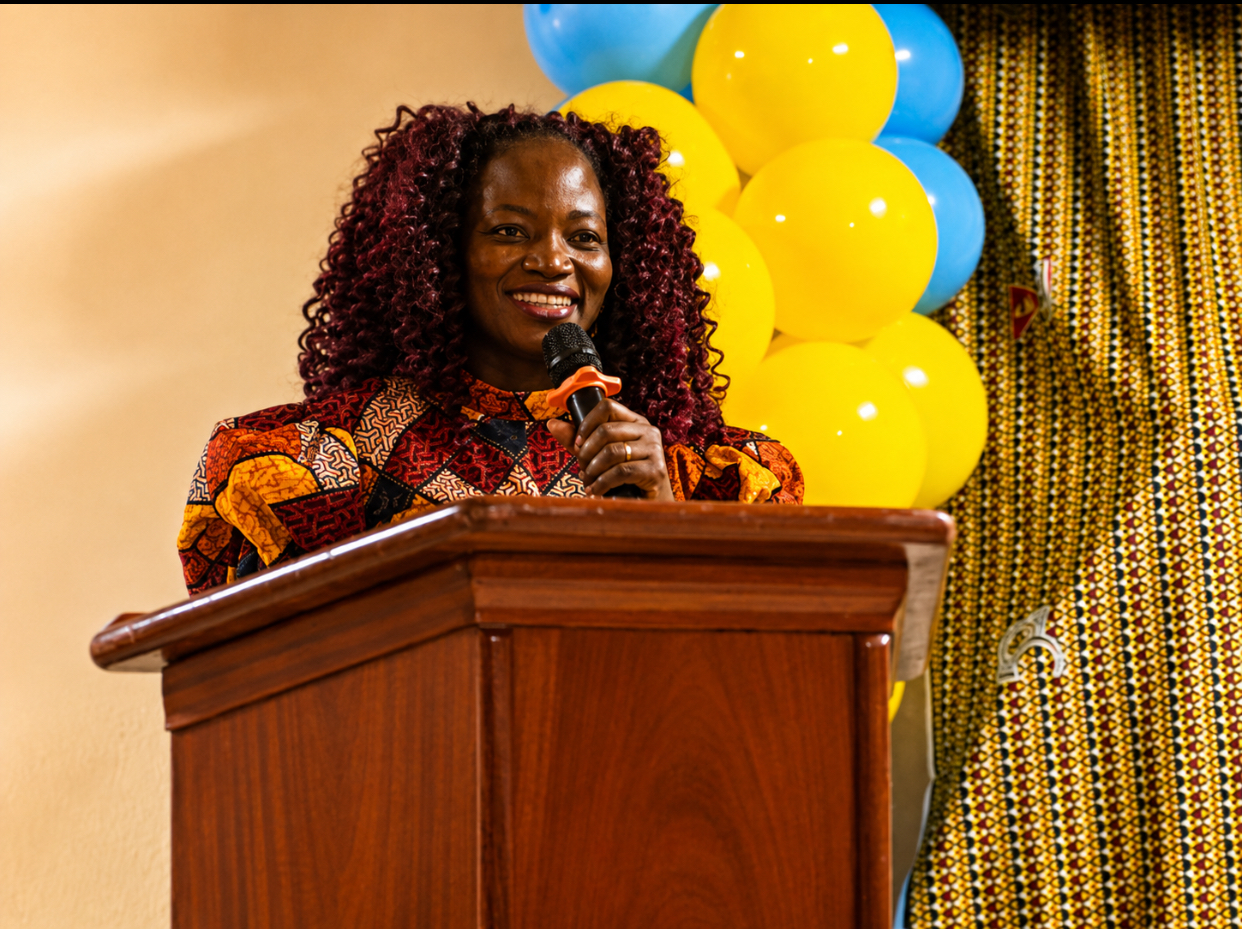
Coordinator of the Ghana Civil Society Organisations Platform on the Sustainable Development Goals (SDGs), Ms. Levlyn Asiedu Konadu, has called for renewed collective commitment to protecting the rights and dignity of young people as the Planned Parenthood Association of Ghana (PPAG) marks its 60th anniversary.
She made the call on Thursday, August 27, 2026, when she chaired a public lecture organised by PPAG at the Coconut Grove Hotel in Accra as part of activities marking the Association’s 60th anniversary.
Held on the theme “Healthier Lives, Stronger Communities: Empowering Ghana’s Future,” the lecture brought together representatives of government institutions, civil society organisations, development partners, academia, health services, the media, the private sector, volunteers, PPAG staff, and other stakeholders.
Ms. Asiedu Konadu said PPAG’s six-decade journey should not be regarded as the achievement of one institution but as a national legacy that required the continued commitment and support of stakeholders.
She urged individuals and organisations associated with PPAG’s work to reflect on how they could contribute to strengthening its impact in the years ahead.
“It does not belong to PPAG as an organisation; it belongs to all of us,” she said, urging stakeholders to commit, contribute, and help make the 60th anniversary meaningful.
Collective responsibility
Ms. Asiedu Konadu said the anniversary provided an opportunity for stakeholders to reflect on PPAG’s contribution to national development and consider how they could help shape its next chapter.
She said PPAG’s longstanding commitment to sexual and reproductive health rights remained critical to protecting the dignity and well-being of young people.
According to her, young people needed access to accurate information, appropriate support, and services to enable them to make informed decisions about their lives.
“When it comes to protecting the rights and dignity of young people, sexual and reproductive health rights is one, and PPAG is wholeheartedly committed to it,” she said.
She therefore urged stakeholders to continue supporting PPAG to deepen its contribution to the development of young people and communities across the country.
PPAG outlines anniversary initiatives
Mr. Gideon Yaw Tekpor Leckson-Leckey, President of the PPAG Governing Council, said the Association would focus on innovation in service delivery, resource mobilisation and youth leadership as it entered its next phase.
He said one of the major activities would be a national community outreach caravan to bring family planning services, youth-friendly counselling, HIV and sexually transmitted infections education and referrals, maternal health education, and other essential services closer to underserved communities.
PPAG would also organise a National Youth Sexual and Reproductive Health and Rights Leadership Summit, bringing together young people, student leaders, peer educators, disability advocates, women-led organisations, rural stakeholders, and policymakers.
The summit, he said, would provide a platform for young people to deliberate on issues including consent, digital safety, menstrual health, misinformation, healthy relationships, and access to community services.
‘60 stories’ campaign
Mr. Leckson-Leckey announced a 60-story social impact campaign to document the experiences of individuals, communities, staff, volunteers, and partners who had been impacted by PPAG’s work over the past six decades.
He said the stories would be shared through documentaries, television discussions, short digital videos, commemorative publications, and photo exhibitions.
The initiative, he said, would be implemented ethically, with appropriate consent and safeguarding measures.
He also announced plans for a national policy dialogue series to bring together government, Parliament, civil society, legal professionals, traditional leaders, young people, academia, development partners, and the media to deliberate on emerging sexual and reproductive health issues.
An innovation challenge would also be organised to enable young people, researchers, health workers, social enterprises, and technology companies to develop practical solutions to barriers affecting access to sexual and reproductive health services.
Young people as partners
Dr. Charles Nii Ayiku Ayiku, General Manager for External Communication at the Electricity Company of Ghana (ECG) and guest speaker, called for greater youth participation in decision-making processes.
Drawing on his experience working with young people, he urged institutions to create safe spaces where young people could ask difficult questions without fear or embarrassment.
“Treat young people as partners, not beneficiaries. A beneficiary serves; a partner decides,” he said.
Dr. Ayiku Ayiku challenged institutions to give young people meaningful representation on boards, design teams, budget committees, and evaluation panels.
He said PPAG’s next 60 years should focus on building sustainable systems that could continue delivering results irrespective of changes in leadership.
“If the next 60 years were about building a movement, the next 60 years must be about building a system,” he said.
Beyond celebration
Ms. Asiedu Konadu said the 60th anniversary should go beyond ceremonial celebrations and serve as an opportunity to renew commitment to the values and principles that had sustained PPAG’s work.
She said PPAG’s future would depend largely on the willingness of stakeholders to move beyond participation to meaningful contribution.
Dr. Ayiku Ayiku urged PPAG to measure its six-decade journey not merely by the number of years but by the opportunities it had created for successive generations of young people.
“Do not count the years. Count the doors,” he said.
He described his own journey as evidence of the impact of creating opportunities for young people.
“I am not the achievement. I am the evidence,” he said.
The Planned Parenthood Association of Ghana, which has worked for decades to advance sexual and reproductive health and rights, is using its 60th anniversary to reflect on its achievements while positioning itself for a new phase of innovation, youth engagement, and community impact.
Source:Joseph Kobla Wemakor
