
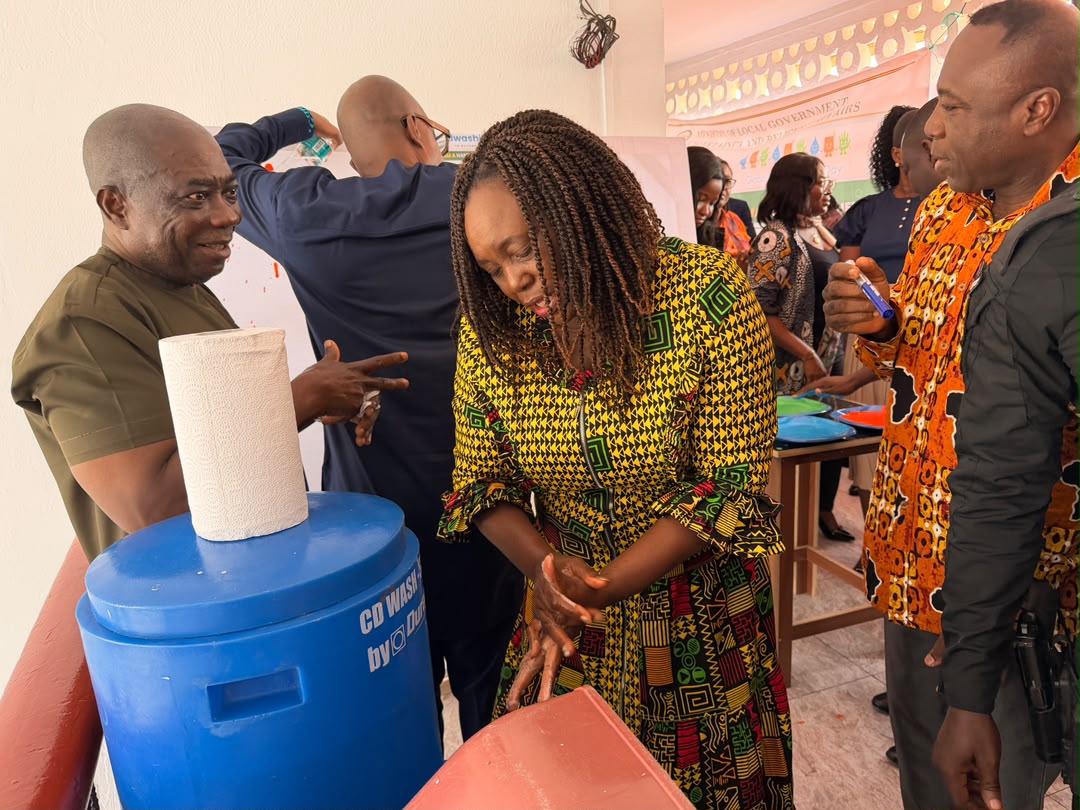
The Ministry of Local Government, Chieftaincy and Religious Affairs, together with its development partners, has reaffirmed its commitment to promoting hand hygiene as a critical pillar of public health and sustainable development in Ghana.
The commitment was made during the national launch of the 2026 Global Handwashing Day commemoration, held under the theme “I Am a Handwashing Hero.”
Speaking at the event, the Deputy Minister for Local Government, Chieftaincy and Religious Affairs, Hon. Rita Naa Odoley Sowah, emphasized the need to translate public awareness into consistent hygiene practices to help prevent infectious diseases, reduce healthcare costs, and improve the general well-being of Ghanaians.
According to her, Global Handwashing Day should serve as a catalyst for converting knowledge into practice, practice into habits, and habits into a national culture.
“A handwashing hero is anyone who washes their hands with soap at critical moments and encourages others to do the same. Each of us can be a hero at home, in school, at work, in the market, and within our communities. I am a handwashing hero. What about you?” she queried.
She explained that the Ministry works through Ghana’s decentralized system specifically the MMDAs while actively engaging traditional authorities and religious institutions to influence behavioral change.
However, she expressed concern over the disappearance and deterioration of handwashing facilities installed at churches and public spaces during the COVID-19 pandemic, stressing the urgent need for sustained investment and routine maintenance.
Infrastructure Gaps Impair Hygiene Progress
Hon. Sowah noted that inadequate access to functional handwashing facilities continues to undermine public health efforts across the country.
Citing estimates from the World Health Organization (WHO) and UNICEF, she indicated that approximately 646 million children worldwide lacked basic hygiene services at school in 2023, with nearly one in three schools having no basic facilities at all.
In Ghana, UNICEF data revealed that only about four in ten people had access to a basic handwashing facility with water and soap on their premises in 2022.
“A household may have a tap or a water storage tank, but if there is no soap, or the water has run out, proper handwashing becomes difficult. Similarly, a basin without water, a tap without soap, or a broken handwashing station cannot serve its purpose,” she explained.
The Deputy Minister pointed to busy markets, transport terminals, and public toilets as high-risk locations where inadequate water supply and a lack of soap continue to expose the public to preventable health hazards.
“A sign that says ‘Wash your hands’ cannot take the place of water, soap, and a functioning facility. How well are we monitoring these facilities in our markets, transport terminals, and food premises? We need to do more,” she stated.
Call to Action for Local Assemblies and Community Leaders
Hon. Sowah urged all MMDAs to incorporate hand hygiene directly into their local development plans and allocate resources for facility installation, maintenance, and regular monitoring.
She advised assemblies to identify priority locations, assign clear responsibility for water and soap replenishment, and set aside funds for repairs.
“Assemblies must regularly inspect markets, lorry stations, slaughterhouses, public toilets, schools, health facilities, and other busy public spaces to ensure that handwashing facilities are functional and adequately supplied,” she directed.
She also appealed to traditional leaders chiefs and queen mothers to use festivals, community durbars, and palace engagements to advocate for hygiene and environmental cleanliness.
Similarly, religious leaders were encouraged to provide accessible handwashing stations at the entrances, restrooms, and food preparation areas of places of worship, ensuring accessibility for children, older adults, and persons with disabilities.
The Deputy Minister further tasked the media with intensifying public education in local languages and highlighting practical, community-led hygiene solutions.
However, she called on Metropolitan, Municipal, and District Assemblies (MMDAs), traditional authorities, and religious leaders to prioritize hand hygiene through sustained funding, effective monitoring, and improved infrastructure nationwide.
CONIWAS Demands Year-Round Investment
Echoing the government’s call, the Chairperson of the Coalition of NGOs in Water and Sanitation (CONIWAS), Dr. Beata Awinpoka Akanyani, urged authorities to prioritize sustainable financing and maintenance of WASH infrastructure in public institutions.
She emphasized that while handwashing with soap remains one of the most cost-effective public health interventions, awareness campaigns alone will not yield results without functional infrastructure.
Dr. Akanyani noted that many communities, schools, and health centers across Ghana continue to face acute shortages of water, soap, and functional handwashing points.
She urged development partners to sustain funding for hygiene promotion coupled with broader water supply and sanitation projects, while calling on teachers, healthcare workers, and media houses to promote hygiene year-round.
Reaffirming the commitment of CONIWAS a coalition representing over 90 non-governmental organizations—Dr. Akanyani asserted that Global Handwashing Day must transcend annual ceremonial events.
“Let us move beyond awareness to action, beyond commitment to results, and beyond a single day to a lifelong culture of hygiene. Clean hands save lives, protect dignity, and build a healthier Ghana,” she stated.

Pioneer Recognized for Hygiene Advocacy
As part of the commemoration, Mrs. Theodora Adomako-Adjei, former Director and Head of Commercial and Extension Services at the Community Water and Sanitation Agency (CWSA), was formally recognized for her pioneer role in promoting handwashing with soap in Ghana.
Accepting the honor, Mrs. Adomako-Adjei dedicated the award to the collective effort of institutions, development partners, and grassroots champions who have driven hand hygiene initiatives since 2008.
“When we started, many people asked: ‘Why handwashing? Is it really that important?’ We began promoting Global Handwashing Day with one simple belief: clean hands can save lives and protect an entire nation. The COVID-19 pandemic reinforced that message,” she recalled.
Mrs. Adomako-Adjei highlighted early milestones, including community outreach, educational campaigns, and the widespread introduction of the Veronica bucket to extend handwashing access to underserved areas. While acknowledging the contributions of mothers, teachers, health workers, and student ambassadors, she cautioned that the campaign is far from over.
“We have come a long way since 2008, but the work is not finished. Until every home, institution, and public place has access to water and soap, our work continues,” she said.
International Partners Outline Strategic Roadmap
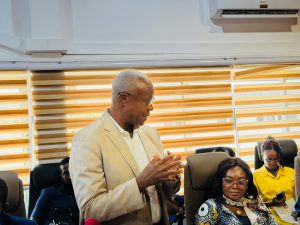
Dr. Frank Lule, representing the WHO Country Representative, commended Ghana’s leadership in WASH advocacy. He revealed that WHO and UNICEF have released their first-ever guidelines on hand hygiene in community settings, noting that Ghana played a significant role in their formulation.
Dr. Lule outlined seven priority actions for government consideration: establishing strong leadership, designating a lead coordinating ministry, integrating hand hygiene into national development strategies, assessing national capacity gaps, setting clear targets, securing sustainable financing, and executing priority interventions.
“No one should be left behind because they lack the handwashing services needed to protect their health,” Dr. Lule stated.
World Bank Calls for Handwashing Integration Across Development Projects
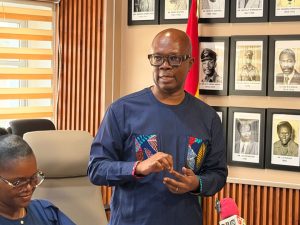
Dr. Harold Esseku, Senior Sanitation Specialist at the World Bank, underscored the need to integrate handwashing components directly into broader sector programmes such as agriculture, education, and rural development noting that global development financing has shifted away from standalone hygiene projects.
While praising Ghana’s uninterrupted annual commemoration of Global Handwashing Day since 2008, Dr. Esseku warned against post-pandemic complacency. He stressed that routine handwashing dramatically reduces common, costly ailments such as respiratory infections and worm infestations, ultimately safeguarding national productivity.
WaterAid Urges Adoption of WHO-UNICEF Hygiene Guidelines and Sustained Funding
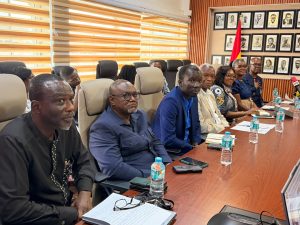
Highlighting the civil society perspective, Mr. Ibrahim Musah, Head of Strategy, Policy, and Campaigns at WaterAid Ghana, urged the government to formally adopt and implement the newly released WHO and UNICEF guidelines on hand hygiene in community settings.
He stressed that embedding these international standards into national frameworks was essential to building resilient public health policies and addressing long-standing structural gaps in water and sanitation access.
Mr. Musah acknowledged that while Ghana had made notable progress in hygiene awareness during the peak of the COVID-19 pandemic, public health momentum had visibly slowed in recent years.
Emphasising the 2026 theme, “I Am a Handwashing Hero,” he noted that clean hands remained a fundamental defence against the spread of infectious illnesses across homes, healthcare centres, schools, and workplaces.
He highlighted that achieving universal hand hygiene required dedicated, multisectoral leadership, calling on traditional rulers, clergy, youth groups, and private sector players to actively champion hygiene practices in their respective spheres.
He also appealed to international donors and development partners to sustain funding for hygiene promotion despite global economic pressures and declining Official Development Assistance (ODA).
He warned that scaling back financial support risked undoing past gains, maintaining that reliable investment in basic handwashing infrastructure remained one of the most cost-effective strategies to save lives and safeguard national productivity.
World Vision Reaffirms Commitment to Expanding Hygiene Access
Mr. Yaw Atta Arhin, Technical Specialist for Water, Sanitation, and Hygiene (WASH) at World Vision Ghana, reaffirmed his organisation’s unwavering commitment to expanding access to clean water and sanitation infrastructure across schools and rural communities nationwide.
He underscored that handwashing with clean, running water and soap remained a non-negotiable, life-saving intervention.
According to Mr. Arhin, ensuring consistent access to hygiene facilities directly combats preventable childhood diarrhoeal diseases and cholera, which continue to compromise child health and development.
He highlighted the critical link between adequate WASH facilities and educational outcomes, noting that clean, safe school environments significantly reduce absenteeism, keep children healthy, and foster better learning environments, particularly for young girls.
Mr. Arhin emphasised that World Vision Ghana would continue to collaborate closely with government agencies, district assemblies, and civil society partners to construct sustainable water facilities, distribute hygiene supplies, and institutionalise handwashing practices in underserved communities across the country.
Participants Pledge Commitment to Handwashing with Soap
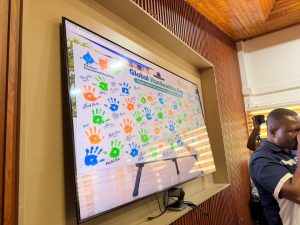
As part of the launch activities, participants took part in a symbolic handprint pledge to demonstrate their personal commitment to handwashing with soap, calling for a collective shift from awareness to access, from access to practice, and from practice to lasting habits.
Source: Isaac Kofi Dzokpo/mydailynewsonline.com
