
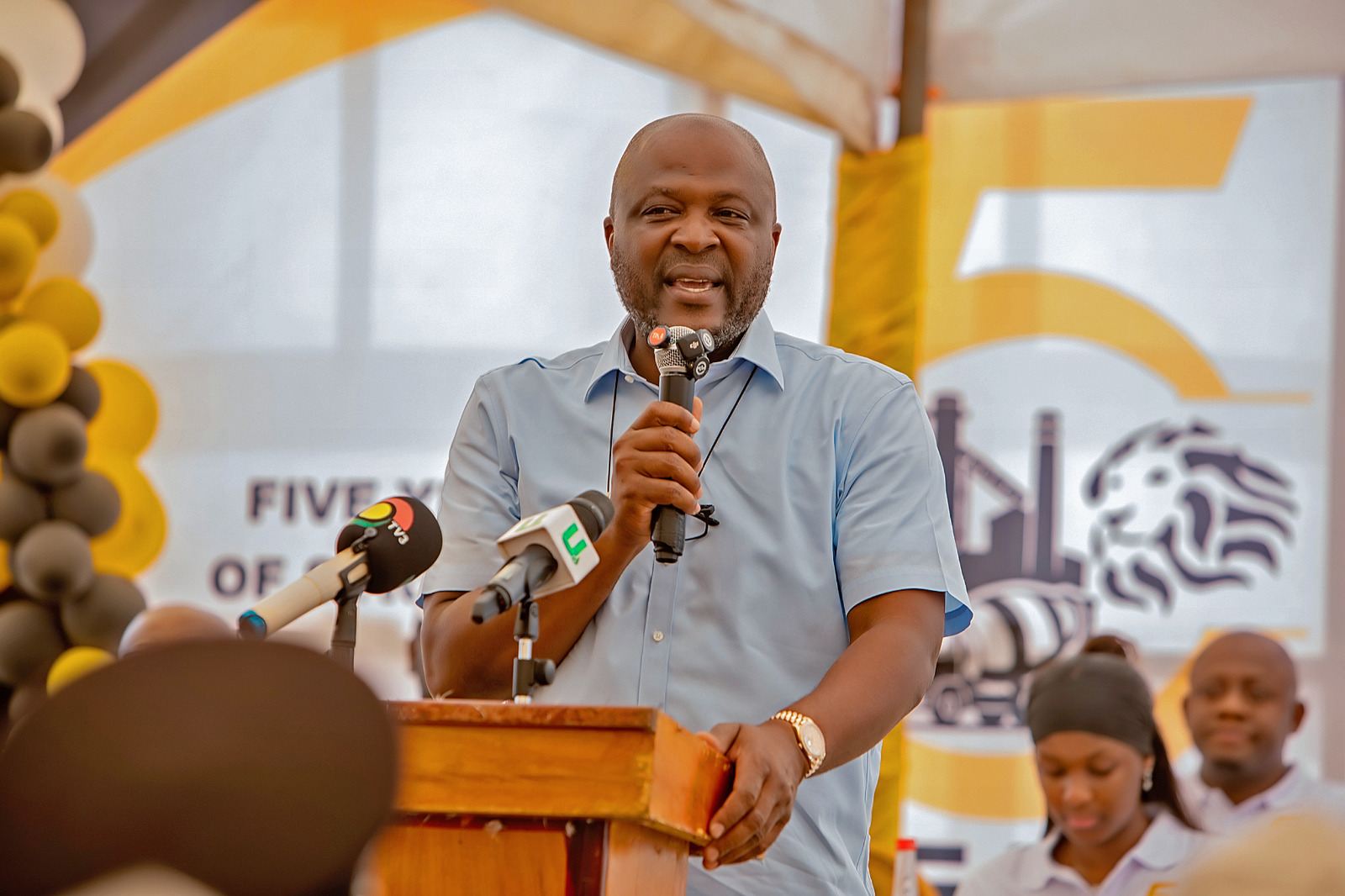
Damang Gold Mine Limited and its contractors now employ approximately 2,300 workers, just six months after businessman Ibrahim Mahama, through Engineers and Planners (E&P), took over operations of the mine.
He explained that the increase could bring total employment across the mine and its contractors to approximately 2,400.
According to him, about 62% of the company’s regular employees come from the 10 communities within its operational area.
He said the company had also committed to reserving 60% of employment opportunities for local residents as part of efforts to ensure that surrounding communities benefit directly from the mine.
The company has also engaged nearly 190 national service personnel, providing young graduates with opportunities to gain practical experience.
Chiefs Praise Job Protection
Traditional leaders at the forum commended Mr Mahama, who is also Group Chairman of Dzata Holdings, for retaining workers following the change in management.
The Gyasihene of Damang, Nana Kofi Enyan, said the decision had brought relief to employees who initially feared losing their jobs when the mine changed operators.
“One seeing is worth 1,000 tellings,” he said, stressing that the improvements witnessed by residents were more meaningful than promises.
He said the company’s actions had helped restore confidence among workers and host communities.
The Chief of Amoanda, Nana Kofi Ngoro II, also praised management for the progress made within the first six months.
He welcomed plans to construct an ultra-modern hospital and assured the company that traditional authorities were prepared to provide land for the project.
Both chiefs pledged their support for the mine and encouraged residents to cooperate with management.
Mining Activities Increase
Beyond employment, Damang Gold Mine has increased its mining activities and invested in equipment to improve production.
The Manager in charge of Mining, Frank Dankyi Agyei, said the company was actively extracting fresh material rather than relying entirely on stockpiles left behind by the previous operator, Gold Fields Ghana Limited.
He explained that newly mined material accounted for 60% of what the company processed, while existing stockpiles made up the remaining 40%.
According to him, monthly mining volumes increased from more than 647,000 tonnes between April 19 and 30 to 1.4 million tonnes in May and 1.6 million tonnes in June.
The figure rose to two million tonnes in July, 2.45 million tonnes in August and three million tonnes in September, bringing the reported total to approximately 11.1 million tonnes.
Mr Agyei said the company had deployed at least nine excavators across the Amoanda and Juno pits, supported by approximately 50 to 57 haul trucks.
He disclosed that 12 additional dump trucks had been transferred from Tarkwa Mine for repairs before being deployed at Damang.
The company is also expecting 28 Caterpillar 785 trucks from Tarkwa, while another 28 trucks are scheduled to arrive in Ghana during the first quarter of 2027.
Management expects the investments to support further expansion of mining operations by the middle of 2027.
Community Development Fund Planned
The company has also announced plans to establish a community development fund to support projects in areas affected by its operations.
The Community Relations Manager of Damang Gold Mine Limited, Ramy Oboro, said a percentage of revenue from every ounce of gold produced would be set aside for the fund.
He explained that the money would accumulate over three years before being distributed among communities based on the level of impact from mining activities.
Revenue from oil palm and rubber plantations would also contribute to the fund.
The initiative is expected to support development projects in education, healthcare, roads and other areas that directly affect the lives of residents.
Mr Oboro said the company had maintained the conditions of service inherited from the previous operator without reducing existing employee benefits.
He added that management remained committed to improving relations with host communities and creating opportunities for local businesses.
US$80m Airport Project
Another major development discussed at the forum was a proposed mini airport at Damang, which is expected to cost at least US$80 million.
Mr Oboro said the project, initially planned as an airstrip, would include a two-kilometre runway and other supporting facilities.
He explained that the estimated investment covered two phases of construction and could increase as work progressed.
“It is anticipated that when we are done with the airport, it is going to cost us not less than 80 million dollars, both Phase One and Phase Two,” he said.
The first phase involves preparing and levelling the land, while the second will focus on additional infrastructure and the installation of equipment.
Farmers whose lands fall within areas required for the project are expected to receive compensation and be relocated for safety reasons.
Residents Call for Fair Recruitment and Development
Despite welcoming the progress made by the new management, residents called for greater transparency in recruitment and more opportunities for qualified people from surrounding communities.
Some participants urged the company to provide training that would enable local residents to take up technical and managerial positions.
Others called for better wages for contractors’ workers, improved roads, healthcare facilities and educational infrastructure.
Concerns were also raised about compensation and resettlement arrangements for farmers and families affected by mining activities.
Residents urged management to ensure that affected households received fair compensation and adequate support to rebuild their livelihoods.
They also called for stronger environmental protection measures, particularly to safeguard water bodies and ensure access to clean water.
Some participants encouraged the company to award more contracts to qualified local businesses to help create additional economic opportunities beyond direct employment.
Communities Back New Management
At the end of the forum, chiefs, opinion leaders and residents expressed support for Damang Gold Mine Limited and Mr Mahama.
They said the company’s decision to protect jobs, recruit local residents and invest in mining equipment had helped build confidence in its operations.
However, they stressed that the benefits of mining should extend beyond employment to include improvements in roads, healthcare, education and other essential services.
The residents expressed hope that the company’s planned investments and community development initiatives would translate into lasting improvements in living conditions across the Damang mining enclave.
