
The Tema Oil Refinery (TOR) has disclosed that it inherited a debt of approximately US$517 million as it works to restore full operations, improve its finances and attract fresh investment.
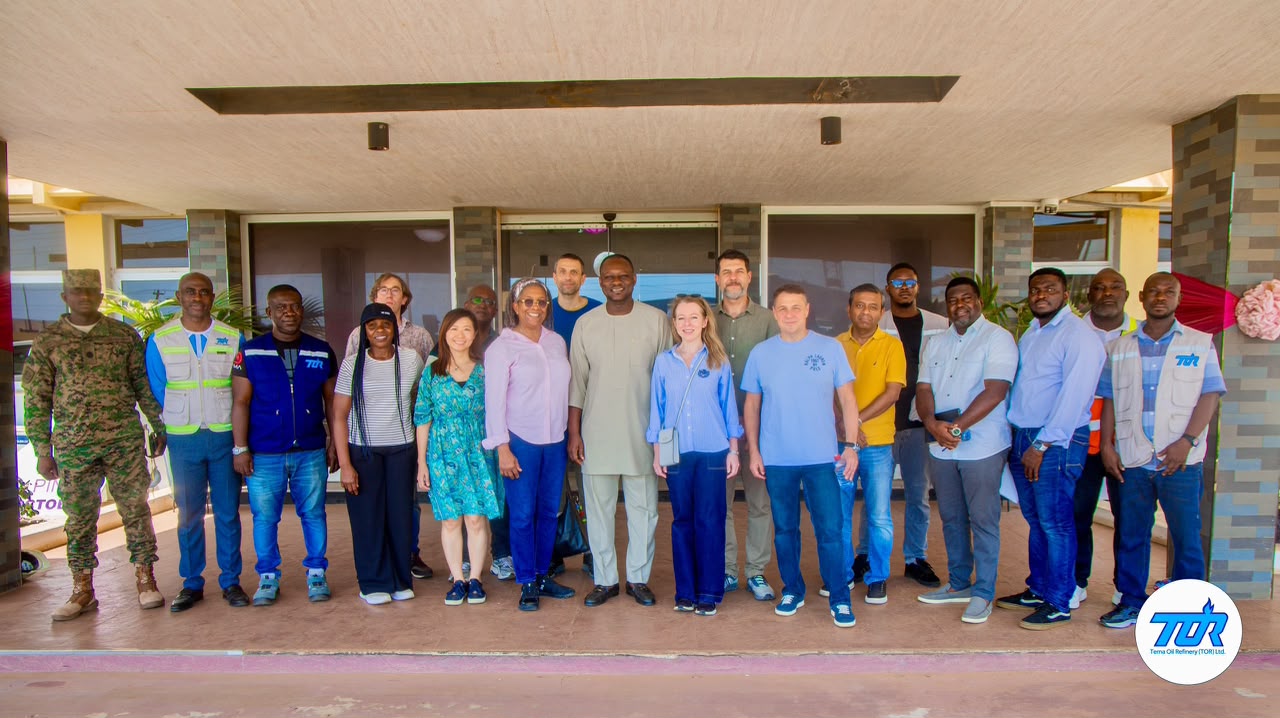
The refinery made the disclosure during a visit by a delegation from the International Monetary Fund (IMF), led by its Ghana Resident Representative, Dr Adrian Alter.
The visit gave the IMF team an opportunity to assess TOR’s recovery efforts, ongoing rehabilitation works and plans to strengthen its financial position.
Speaking during the engagement, TOR Managing Director, Edmond Kombat, said the current management, which took office in May 2025, had been financing the refinery’s operations and rehabilitation works entirely from internally generated funds.
“Since this new management took over, we have not received a dime from the government. Every single thing is done through our internally generated funds,” he said.
Mr Kombat explained that the refinery’s inherited debt included about US$120 million owed to the government.
He said management was in discussions with the government to explore possible debt restructuring and reconcile outstanding financial obligations between TOR and the state.
Similar discussions were also taking place with other state institutions to determine how much each party owed, including the possibility of offsetting mutual debts.
Despite the financial challenges, Mr Kombat said TOR recorded a profit last year and remained confident of sustaining profitability this year and beyond.
He disclosed that management was considering listing the refinery on the Ghana Stock Exchange to attract investors and raise additional capital for its rehabilitation and expansion.
On crude oil processing, Mr Kombat said TOR had refined approximately five million barrels of crude, including two million barrels sourced from Ghana’s oil fields. The remaining volumes were imported.
He explained that the refinery received its first domestic crude supply from the Jubilee Field through a transaction with Vitol, which had been fully paid for.
He also acknowledged the Ghana National Petroleum Corporation (GNPC) for supplying its share of Ghana’s crude allocation.
Mr Kombat expressed hope that GNPC would make its full crude allocation available to TOR next year to ensure a more reliable supply of crude oil and support continuous refinery operations.
He noted that increasing domestic refining would help Ghana maintain a steady supply of petroleum products and reduce the country’s exposure to disruptions in international oil markets, particularly during periods of geopolitical tension.
Beyond crude oil refining, Mr Kombat said TOR was exploring ways to generate more revenue from its existing infrastructure.
He revealed that the refinery had approximately one million metric tonnes of storage capacity and was connected to eight privately operated depots, allowing it to pump petroleum products directly to those facilities.
According to him, these connections provide opportunities for additional income, alongside other commercial services such as laboratory testing of petroleum products.
The discussions also touched on corporate governance, financial accountability and efforts to address a six-year backlog of unaudited financial statements.
Mr Kombat said the Ghana Audit Service had undertaken the audit exercise, while management planned to appoint an external audit firm at the refinery’s next Annual General Meeting to handle future audits.
He noted that KPMG had previously carried out audit assignments for the refinery.
Management was also working to strengthen financial reporting, improve internal controls, address staff-related issues and secure a more consistent supply of crude oil.
The IMF delegation was further briefed on plans to increase refining capacity, rehabilitate critical processing units and restore facilities needed to improve operational reliability.
After the meeting, the delegation toured sections of the refinery to inspect rehabilitated facilities and ongoing engineering works.
The visit formed part of the IMF’s broader engagements with government institutions and selected state-owned enterprises to better understand their financial positions, operational challenges and contributions to Ghana’s economy.
