
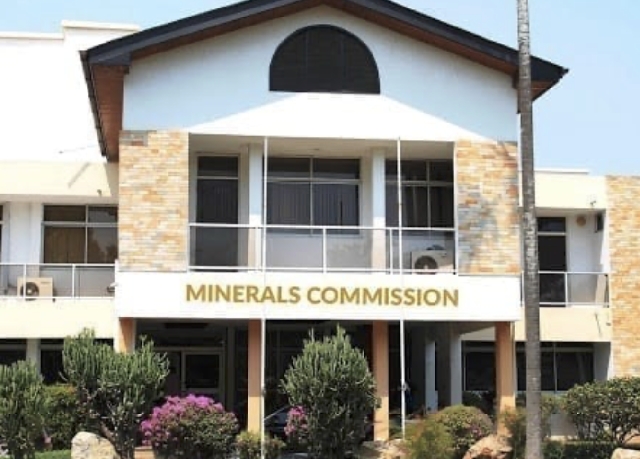
The Minerals Commission has dismissed allegations of unlawful termination and takeover of mining concessions belonging to Narawa Company Limited, insisting that the company’s leases were revoked following its failure to settle outstanding mineral rights fees amounting to US$909,127.79.
The Commission described claims that it forcibly terminated Narawa’s mining leases and handed its operations to another individual as false and misleading, maintaining that the action followed established legal and regulatory procedures.
In a statement issued by its Communications and Corporate Affairs Directorate, the Commission explained that Narawa held mining leases covering the Nsutam and Osiem concessions but failed to fulfil its financial obligations under Section 24 of the Minerals and Mining Act, 2006 (Act 703).
According to the Commission, the company was required to pay annual mineral rights fees under its lease agreements with the government but accumulated outstanding payments totalling US$909,127.79.
The Commission said it issued Notices to Remedy Breach in accordance with Section 68(2) of Act 703 and Regulation 200(3) of the Minerals and Mining (Licensing) Regulations, 2012 (L.I. 2176), giving the company an opportunity to settle its indebtedness.
However, Narawa allegedly failed to remedy the breach within the prescribed period, prompting the Commission to recommend termination of the leases to the Minister for Lands and Natural Resources on July 29, 2025.
The Minister subsequently approved the recommendation on August 19, 2025, while a formal Notice of Termination was issued to the company on September 3, 2025.
The Commission maintained that the termination effectively extinguished Narawa’s rights over the two concessions, returning the mineral rights to the State.
“With the termination of the leases, Narawa no longer holds any valid mineral right, interest, or entitlement to the Nsutam and Osiem concession areas as the mineral rights have reverted to the State,” the statement said.
It warned that any mining activities undertaken by Narawa on the concessions following the termination would constitute illegal mining.
The Commission also rejected allegations that it authorised or facilitated the invasion of the concessions.
“The Minerals Commission did not and has not sanctioned or permitted any invasion of the area,” it stated.
It explained that the State had subsequently granted new mineral rights over the affected areas to two separate entities, which it said were operating in compliance with applicable laws and regulations.
Narawa Challenges Termination
Meanwhile, the Commission confirmed that Narawa had initiated arbitration proceedings on December 12, 2025, challenging the termination of its mining leases.
It explained that although the dispute remained pending, the termination continued to have effect unless overturned through the appropriate legal process.
The Commission criticised Narawa’s decision to publicly challenge the termination while the substantive dispute remained unresolved.
“It is therefore improper and misleading for Narawa to resort to media trials with false allegations when the same substantive matter is before a court of competent jurisdiction,” the statement said.
The Commission reaffirmed its commitment to transparency, accountability and the lawful administration of Ghana’s mineral resources.
It stressed that it would continue to discharge its regulatory responsibilities in accordance with the law, notwithstanding public allegations surrounding the dispute.
